
CASE STUDY DETAILS
ClaimWise AI
Project Type
Web Platform
Challenge
Delayed claim review and resolution
Domain
Insurance
Impact
comprehensive intelligent claims processing ecosystem.
OVERVIEW
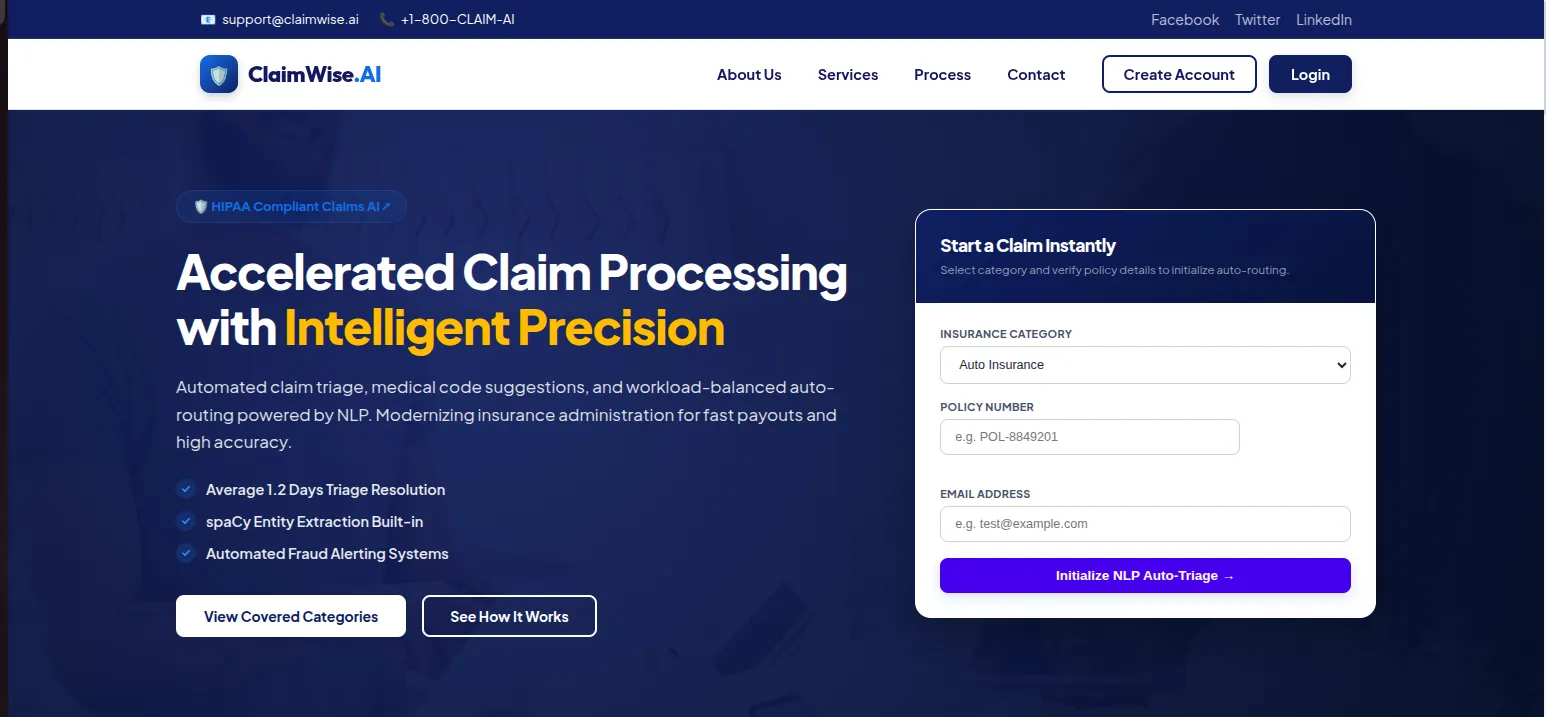
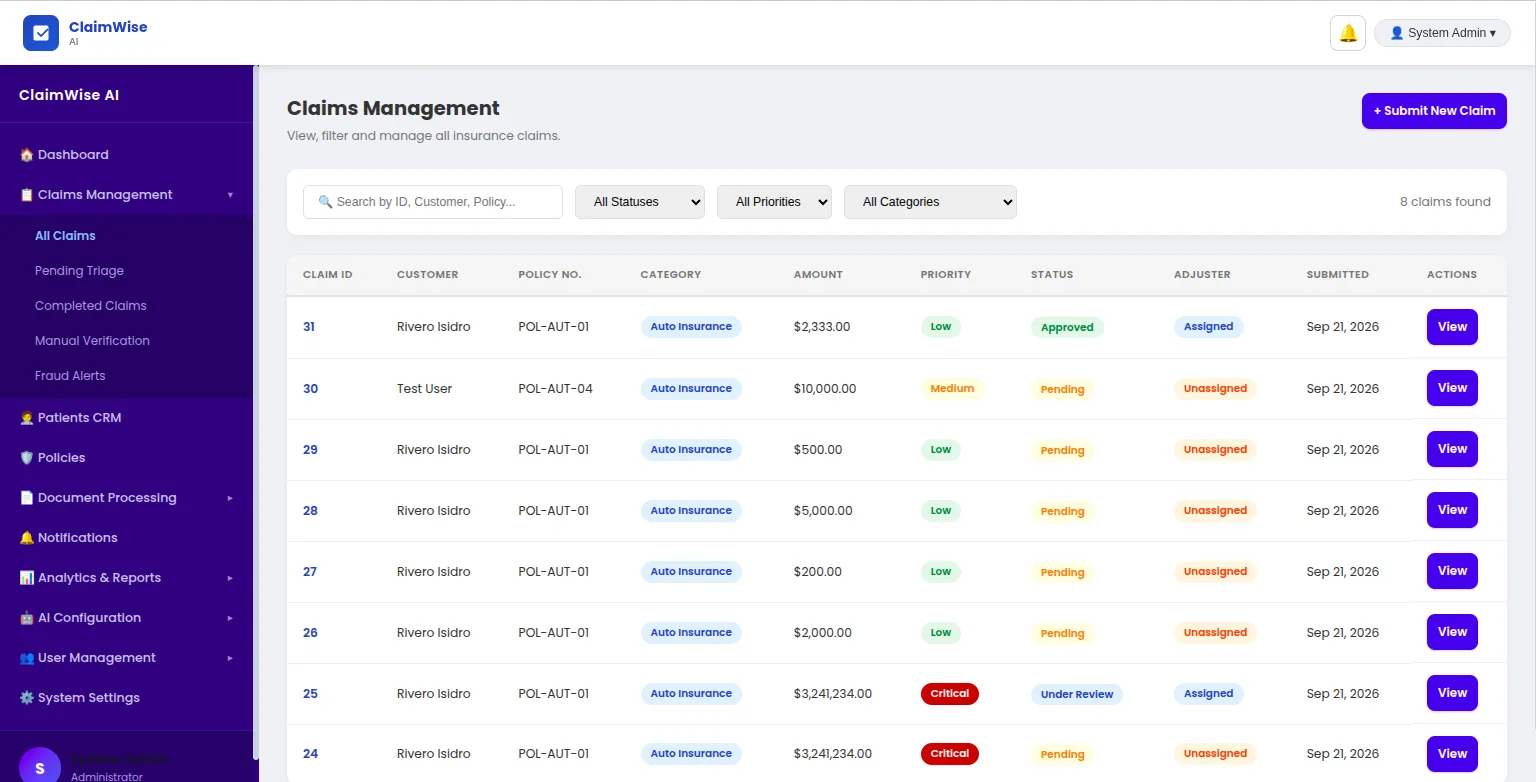
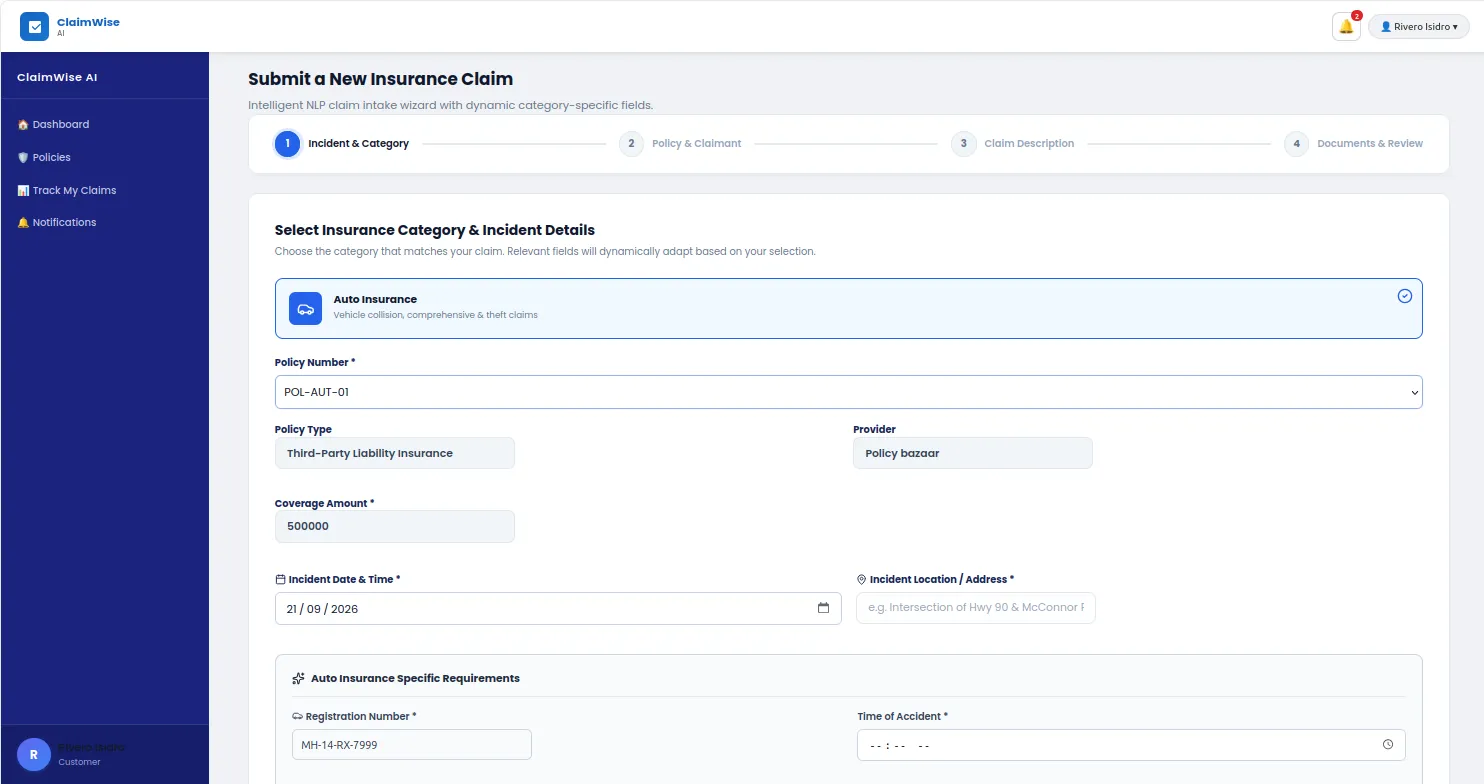
ClaimWise AI is an AI-powered insurance claim triage and auto-routing platform designed to automate the initial processing of insurance claims.
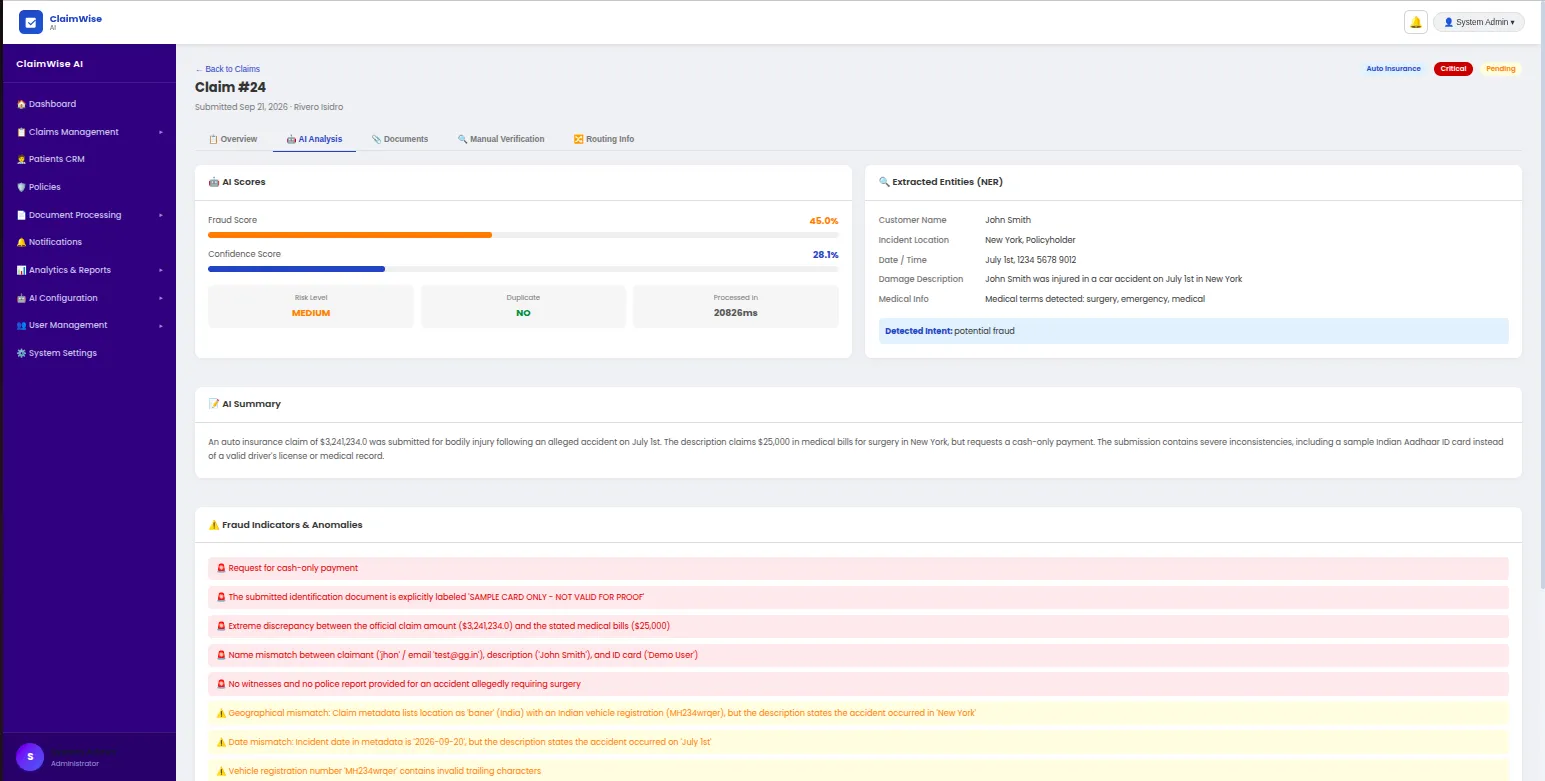
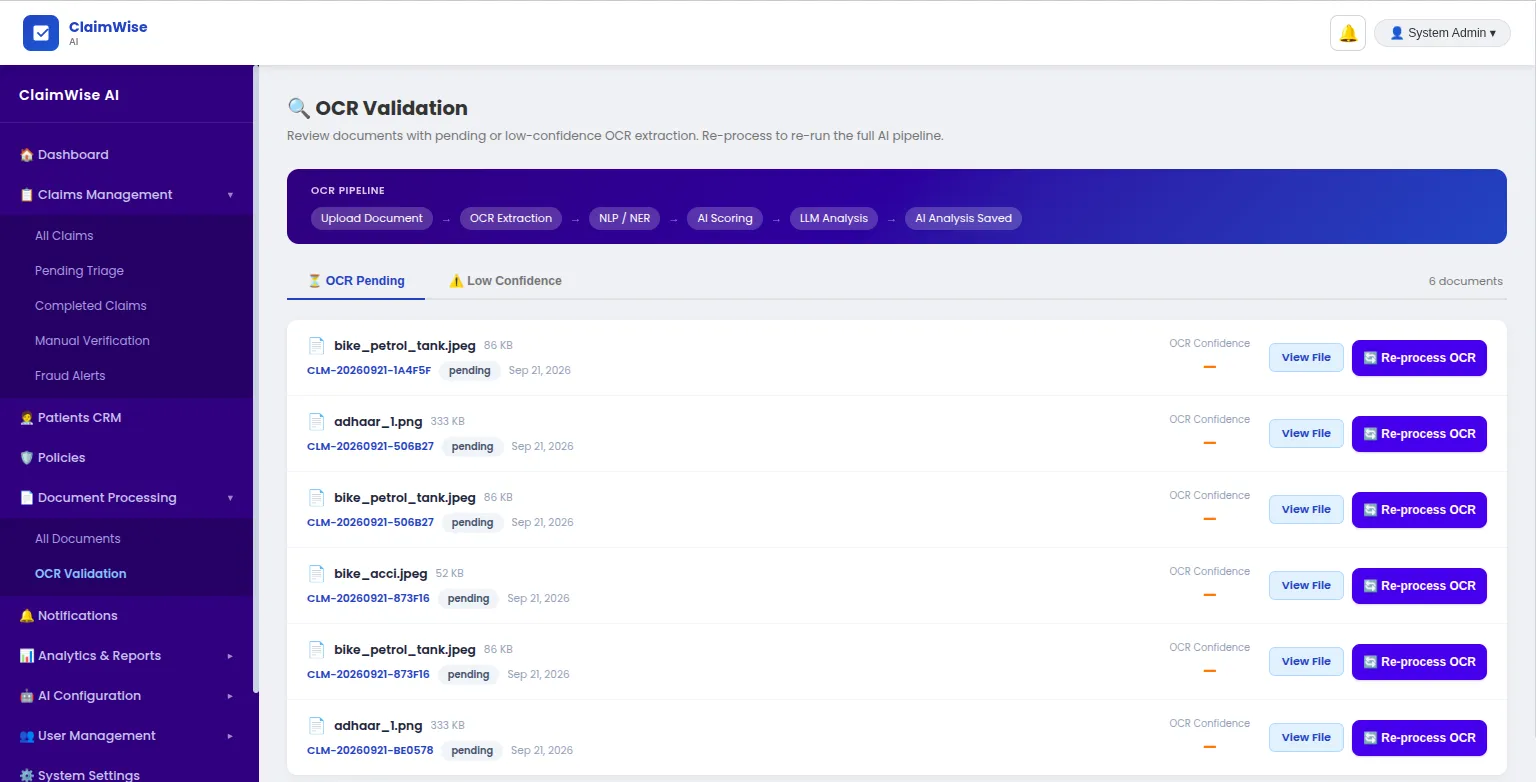
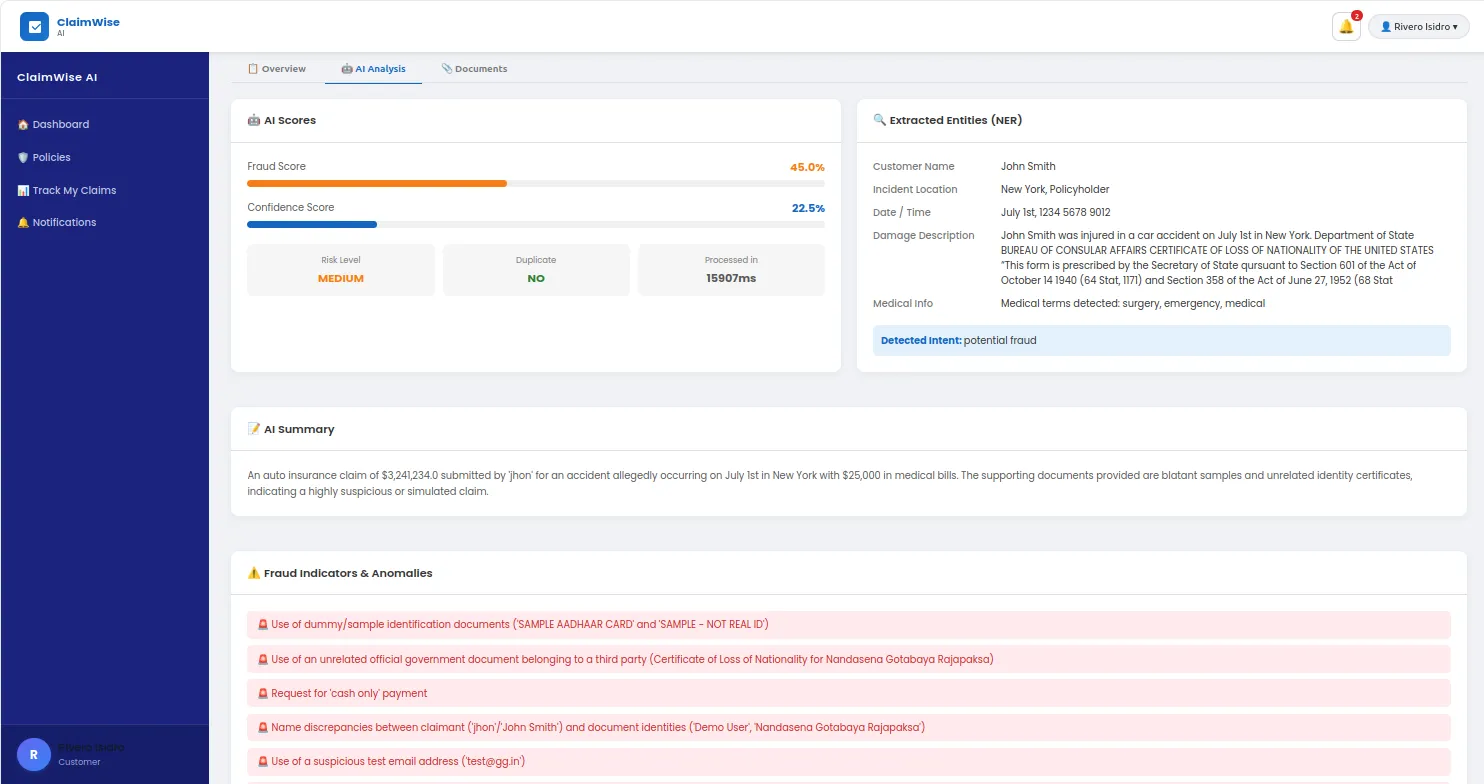
The system accepts claim details and supporting documents, extracts important information using OCR and NLP, analyzes the claim using AI/ML and LLM services, and automatically determines the claim category, priority, risk level, and appropriate routing.
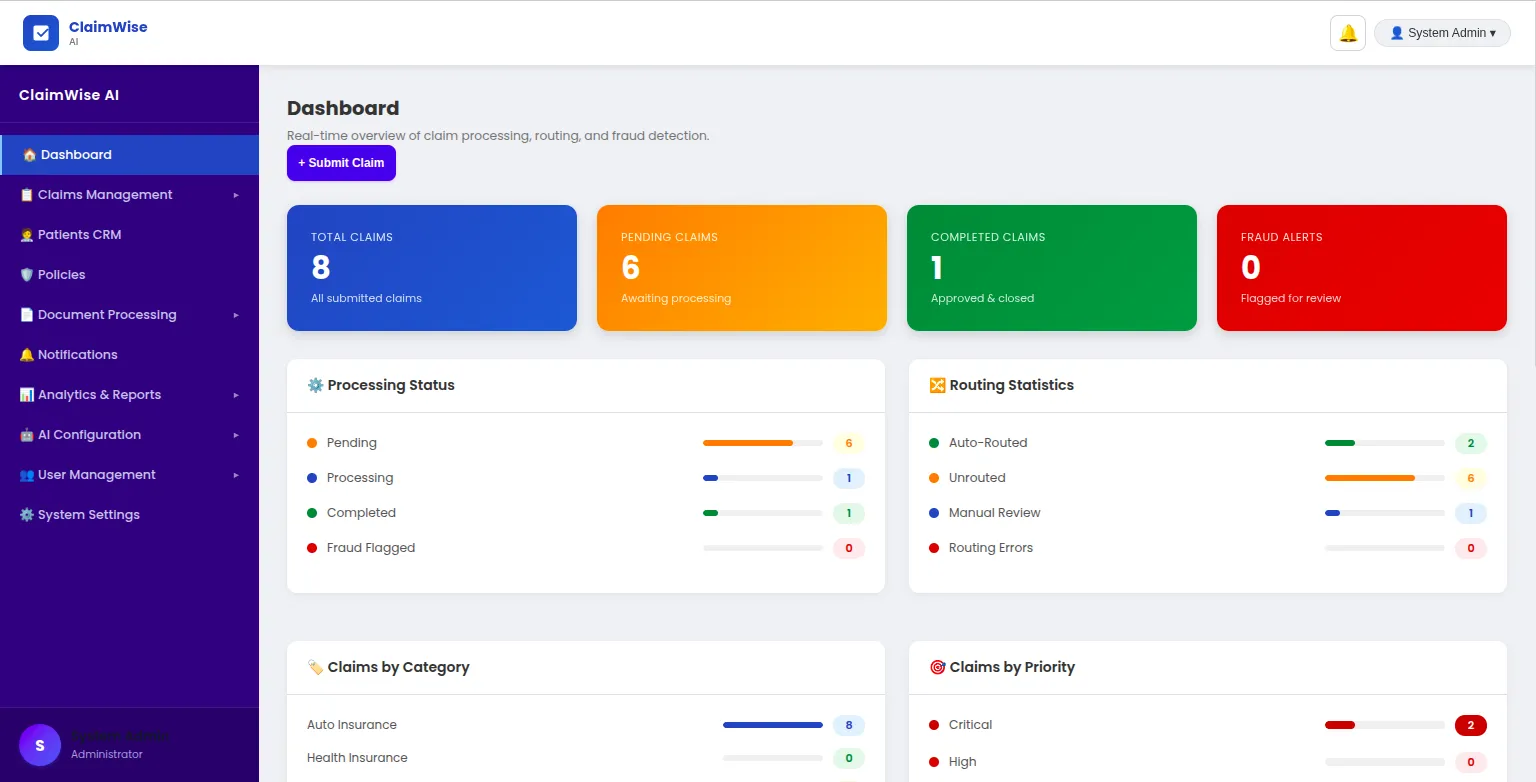
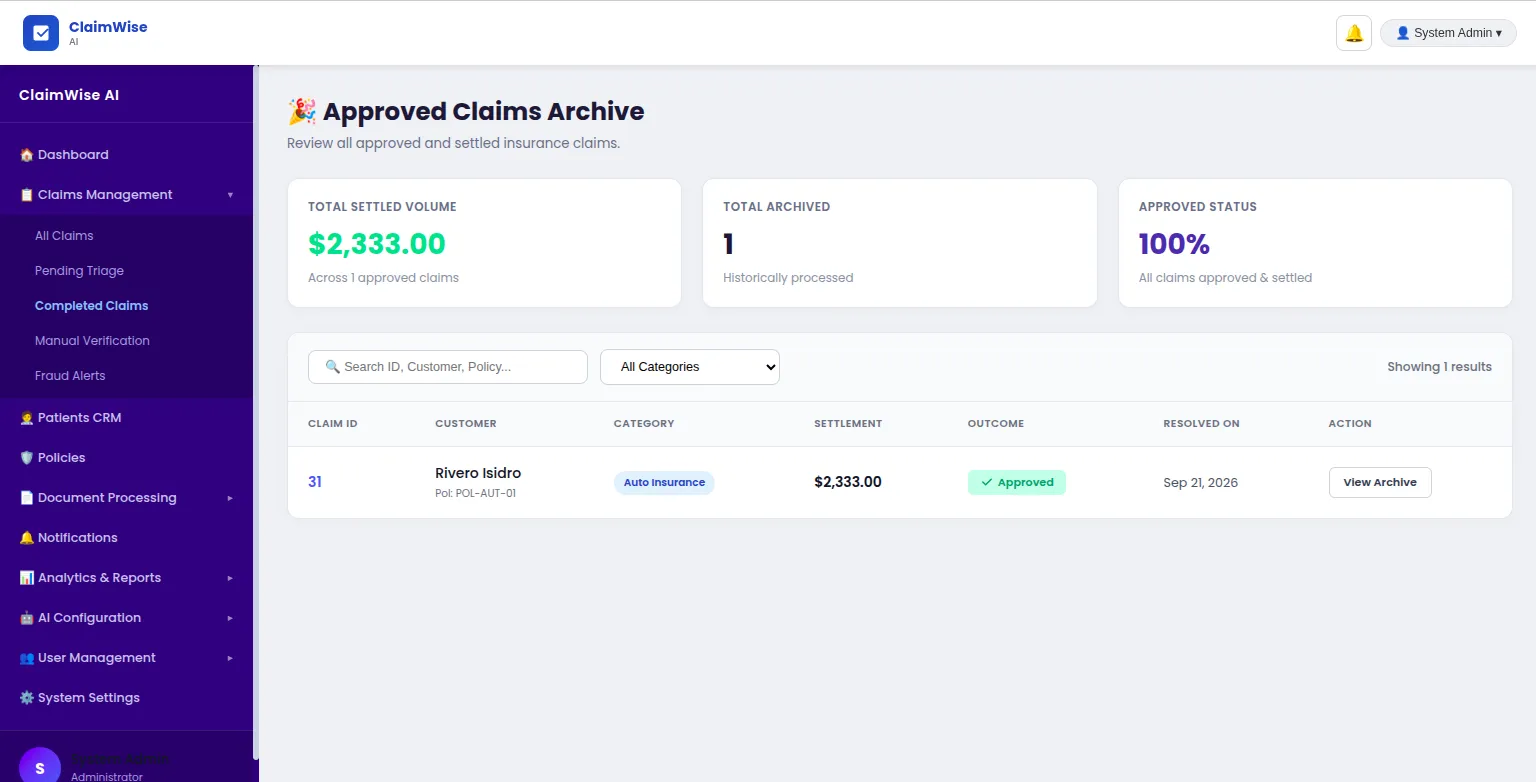
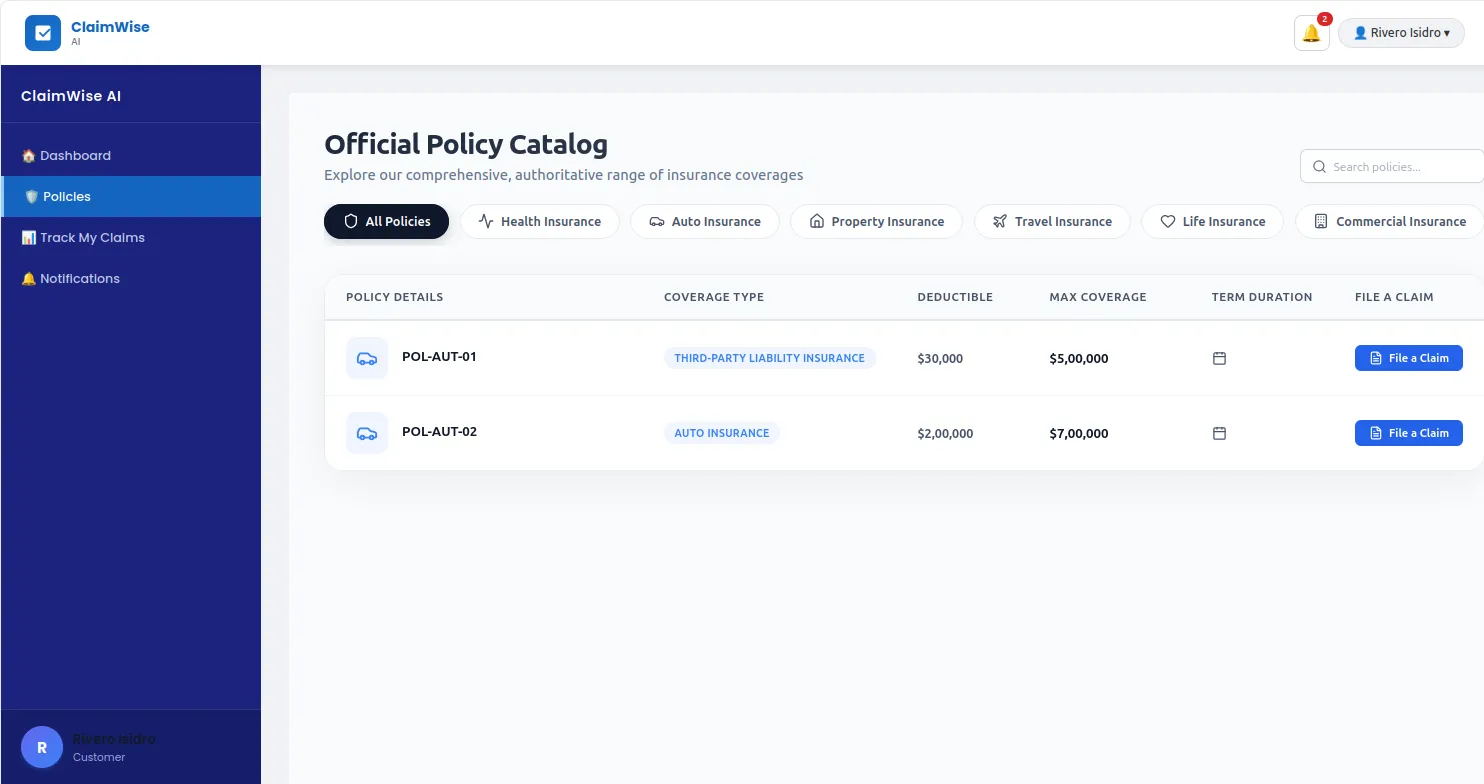
The platform supports role-based access for Customers, Adjusters, Supervisors, and Administrators, providing a complete workflow from claim submission to review, status updates, document requests, and final claim decisions.
PROBLEM STATEMENT
Traditional insurance claim processing is highly dependent on manual document review and repetitive administrative tasks.
The The challenge was to design and develop a modern, AI-powered insurance platform that automates claim processing while improving accuracy, efficiency, security, and operational visibility.
- Time-consuming manual claim intake
- Unstructured claim documents and information
- Difficulties extracting relevant information from documents
- Manual claim classification and prioritisation
- Inefficient claim assignment and routing
SOLUTIONS
To address these challenges, ClaimWise AI was designed as a comprehensive intelligent claims processing ecosystem.
1. Automated Claim Processing
- Digital claim submission.
- Document upload and processing
- Automated OCR text extraction
3. Intelligent Claim Routing
- Rule-based claim routing enginel
- Category-based assignment
- Adjuster assignment management
5. Analytics and Reporting
- Claims analytics
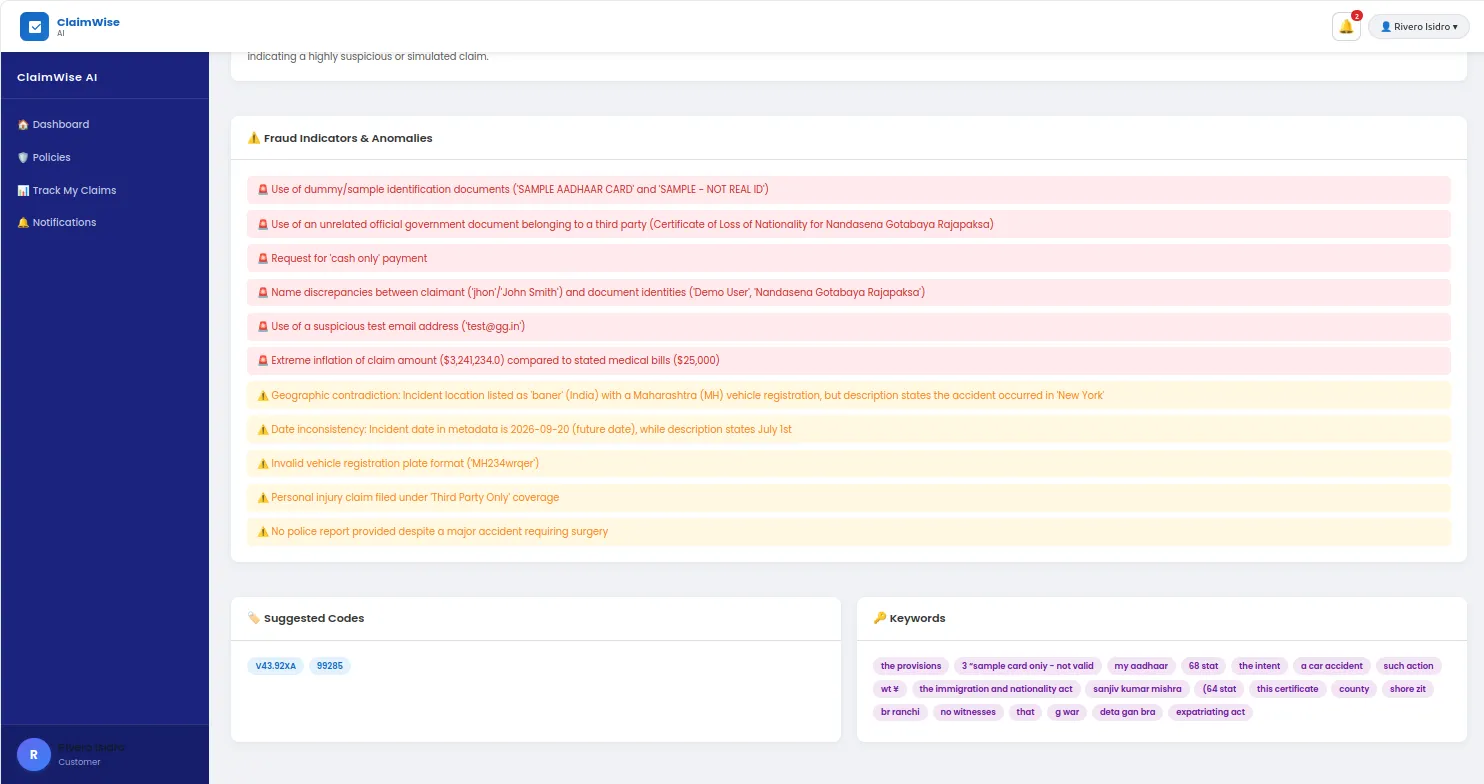
- Fraud analysis
- Performance reports
- Routing statistics
- Adjuster workload tracking
2. AI-Powered Claim Intelligence
- spaCy-based Named Entity Recognition
- TF-IDF feature extraction
- LLM-powered claim analysis
4. Role-Based platform
- Admin
- Supervisor
- Adjuster
- Customer
6. Secure Architecture
- JWT-based authentication
- Role-based access control
- Password hashing using bcrypt
- HIPAA-compliant design principles
APPROACH
Our Approach
Research and Requirement Analysis
- Insurance claim workflow analysis
- Business requirement analysis
System Architecture
- REST API architecture
- AI processing pipeline design
AI and NLP Strategy
- OCR pipeline implementation
- NLP entity extraction
- Machine learning classification
User Experience
- Role-based dashboard architecture
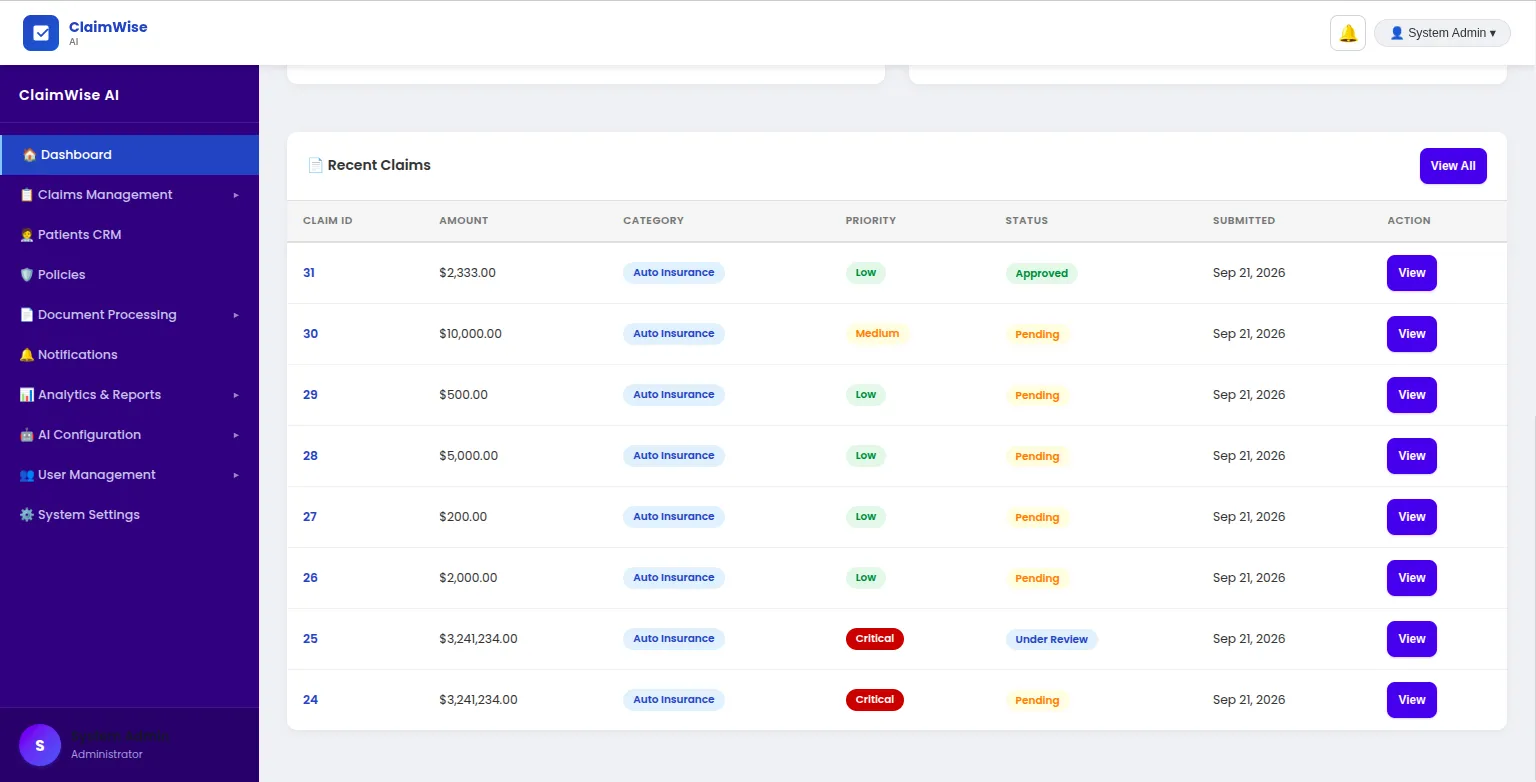
- Claim management interface
- AI analysis interface
Technical Implementation
- React and TypeScript frontend development
- Python and Flask backend development
Final Delivery
- Integrated AI-powered claims platform
- Production-ready application architecture
- Role-based dashboards
- Automated claim processing
- AI analysis and routing
- Developer-ready system structure
SUCCESS AND IMPACT
Platform Validation Results
- Streamlined the insurance claim journey from submission through review and final decision.
- Automatically classified claims based on category, priority, and risk level.
- Extracted and structured information from uploaded documents and images using OCR and spaCy NER.
- Automatically routed claims to appropriate adjusters based on claim category, priority, region, workload, and routing rules.
- Implemented AI/ML-based fraud indicators and risk scoring to support claim assessment.
- Integrated Gemini to generate claim summaries, extract insights, and support intelligent processing.
- Implemented separate workflows and permissions for Customers, Adjusters, Supervisors, and Administrators.
- Added claims analytics, fraud analysis, performance reports, routing statistics, AI configuration, and administrative controls.
Expected Business Impact
- Automated OCR, NLP, AI analysis, and routing to reduce manual processing effort.
- Reduced repetitive work for claims teams by automating initial claim assessment and routing.
- Automatically routes claims to the appropriate adjuster based on business rules and workload.
- Provides real-time claim status, assignment information, processing history, and analytics.
- Uses AI-based classification and risk/fraud scoring to highlight potentially high-risk claims for review.
- Enables customers to submit claims digitally, track status, and receive requests for additional documents.
- Applies consistent categories, priorities, routing rules, and role-based workflows across claims.