With the release of Rails 8.1.2 in 2026, Ruby on Rails has once again reshaped the way developers build web applications. The focus has shifted from juggling multiple services to achieving a completely self-contained, efficient ecosystem. This milestone highlights Rails’ commitment to simplifying complex workflows while keeping the developer experience at the forefront.
The End of Infrastructure Fatigue (move away from complex, manual server management toward automated, streamlined, and simple deployment processes.)
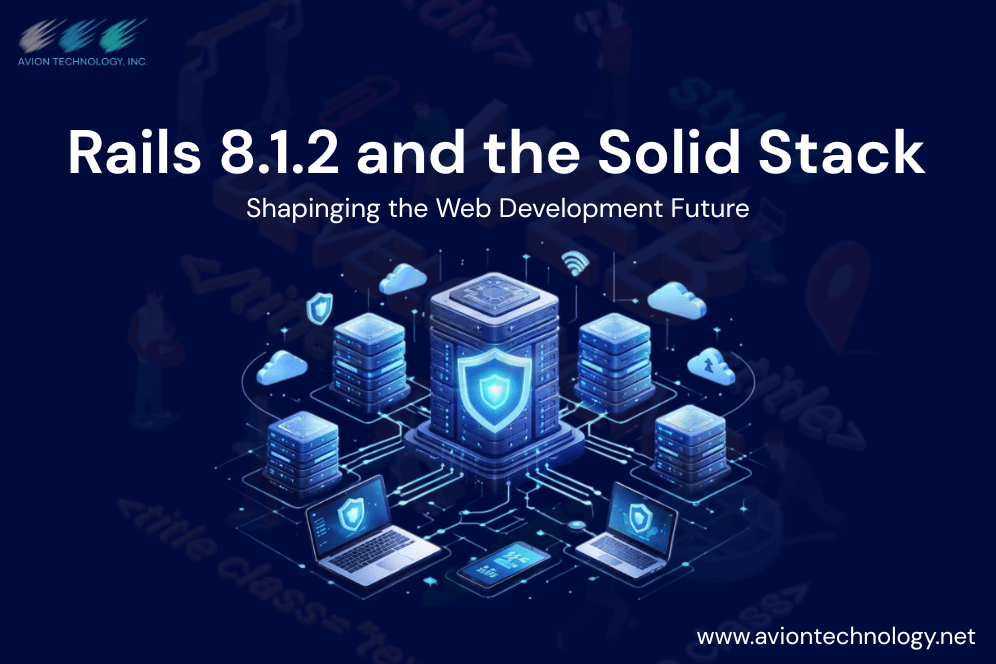
Modern web applications often come with a long checklist of supporting tools: Redis for caching, Sidekiq for background jobs, and container registries for deployment. Rails 8.1.2 introduces the Solid Stack(Set of Database), a built-in framework that centralizes these services. Background processing, caching, and real-time updates can now run directly through your main database Postgres, MySQL, or SQLite without relying on external services.
For developers, this means fewer moving parts and smoother operations. From handling high-volume email jobs to maintaining session states, Rails now consolidates functionality in a single stack, letting teams focus on writing code rather than managing infrastructure.
Deployment with Kamal 2
Deploying Rails applications has often been a complex process requiring multiple services and configurations. The Kamal 2 integration in Rails 8.1.2 simplifies deployment, supporting direct publishing to a range of servers, including AWS, DigitalOcean, and private servers.
This approach removes the dependency on container registries and expensive PaaS solutions, giving teams complete control over infrastructure while maintaining the simplicity of Rails’ deployment philosophy.
Major Updates
Rails 8.1.2 introduces powerful core enhancements that simplify development and improve workflow efficiency. The major updates are :
- Active Job “Continuations”
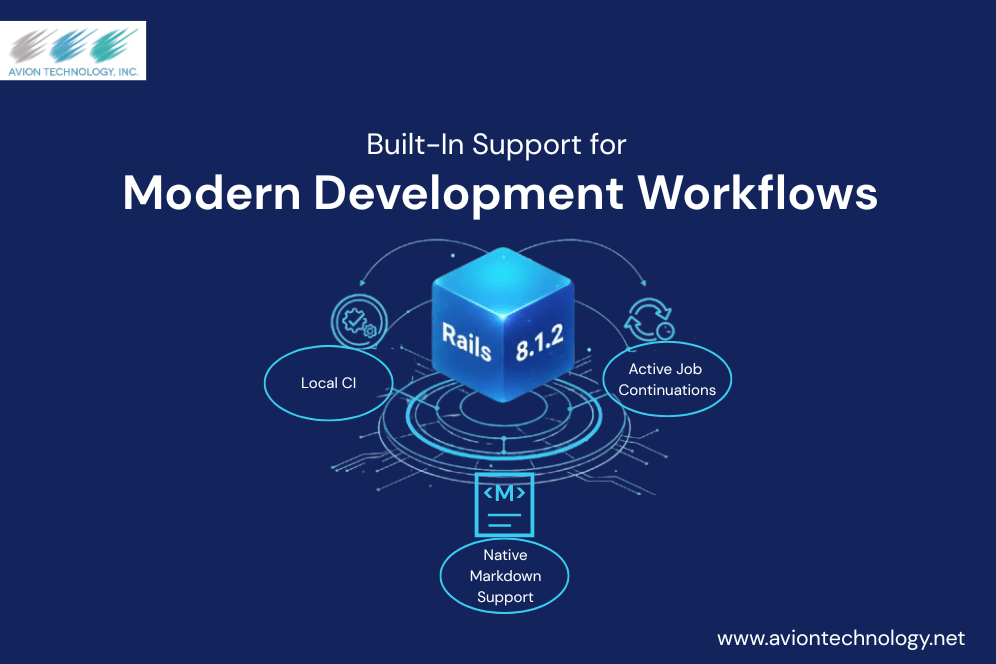
With Active Job Continuations, background tasks no longer need to restart from the beginning if something goes wrong. If a server stops or restarts, the job simply resumes from where it left off. This ensures that processes such as sending emails or handling large data tasks continue smoothly without losing progress. - Local CI (Continuous Integration)
Rails 8.1.2 allows developers to run tests, code checks, and security scans directly on their local machines. Instead of waiting for cloud-based builds, teams can identify and fix issues immediately. This keeps development moving without unnecessary delays. - Native Markdown Rendering
Rails now supports Markdown rendering directly within the framework. Developers can display formatted content such as blogs, documentation, or dashboards without installing additional tools or libraries. This keeps content management simple and easy to maintain.
Evolving Team Responsibilities in the Solid Stack Era
Rails 8.1.2 marks a shift in how teams operate within modern software organizations. The focus moves away from managing multiple external tools and toward building and refining core product functionality. Developers can concentrate more on writing application code while handling fewer supporting services. DevOps teams transition into a more architecture-driven role, emphasizing system design, scalability, and long-term reliability. At the same time, testing becomes faster and more integrated into daily development workflows. The Solid Stack does not remove roles within a company; it reshapes them, creating an environment where teams spend less time coordinating infrastructure and more time delivering meaningful, high-quality software.
Native Support for Modern Development Workflows
With Rails 8.1.2, teams can now adopt modern workflows more easily. As a robust server-side web application framework, Rails provides features like Local CI and Active Job Continuations that encourage continuous testing and incremental development, while native Markdown support allows for rapid content updates without external tools. By embracing these built-in capabilities, teams can move faster, experiment safely, and maintain high-quality code without relying on a patchwork of third-party solutions.
Evolutionary Refinements in the Rails 8.x Release Cycle
While Rails 8.0 was a landmark release that introduced “No-PaaS” tooling like Kamal 2, the Solid suite (Solid Cache, Solid Queue), and a move toward an identification-first security model, Rails 8.1.2 represents the stabilization and expansion of these features.
The primary difference lies in the maturity of the “Solid” database-backed adapters. In 8.0, these were new defaults intended to replace Redis for many applications. By version 8.1.2, these tools have received significant performance optimizations and deeper integration with the Rails core, making them more resilient for high-concurrency environments. Furthermore, Rails 8.1.2 introduces more granular control over Propshaft(Modern and Lighweight Library), the modern asset pipeline, offering better compatibility for legacy JavaScript transitions that were still being ironed out in the initial 8.0 launch.
Avion Technology: Helping You Navigate Rails 8.1.2
At Avion Technology, we provide end-to-end Ruby on Rails software development for startups, scale-ups, and enterprises across the globe. From product discovery to ongoing support, our teams design, develop, and enhance robust Rails-based web and mobile applications aligned with your business objectives.
From planning and structuring new applications to implementing Solid Stack workflows and training internal teams, our experts ensure a smooth transition and optimized performance. Avion Technology helps you fully leverage Rails’ self-contained ecosystem, making development faster, more reliable, and more maintainable.
The Rails Doctrine(Set of Core Principles & Philosophical Beliefs): Developer’s Happiness
Rails 8.1.2 embodies the principle that simplicity and efficiency go hand in hand. By consolidating external dependencies, streamlining CI processes, and providing robust deployment options, Rails empowers developers to focus on what truly matters: creating impactful, high-quality applications.
Upgrading to Rails 8.1.2 in 2026 isn’t just about keeping up with technology; it’s about simplifying workflows and reclaiming time to innovate.
Get in touch with Avion Technology and start building your next application with us that turn your ideas into well-structured Rails solutions.