
Case Overview
Automated end-to-end manufacturing and inventory workflows for a car speedometer production unit using Microsoft Dynamics 365 Business Central. The project focused on improving production control, inventory accuracy, and real-time operational visibility.
Involvement
- Automated manufacturing workflows using Dynamics 365 Business Central
- Collaborated with production and inventory teams to optimize processes
- Implemented MRP, Power Automate workflows, and reporting dashboards
The Brief
To implement a smart manufacturing solution using Dynamics 365 Business Central that automates production workflows, enhances inventory tracking, enables MRP-driven planning, and ensures real-time responsiveness across the production lifecycle.
Our Approach
We carefully structured the site to prioritize gentle guidance and informed choice. Key components include:
- Analyzed production workflows and identified automation opportunities.
- Configured Dynamics 365 Business Central for end-to-end production lifecycle management.
- Implemented inventory automation, bin tracking, and material consumption controls.
- Enabled MRP-driven demand planning and capacity simulation.
- Established vendor management processes with automated purchasing and performance tracking.
- Developed Power BI dashboards to deliver real-time visibility into financial and operational KPIs.
- Designed production orders, BOMs, routing, and machine center planning.
- Integrated Power Automate for real-time alerts and workflow automation.
- Developed dashboards for WIP tracking and production performance.
- Conducted UAT, training, and post-go-live support for smooth adoption.
We implemented a structured automation strategy to streamline manufacturing and inventory processes. Key components include:
Tools Used
- Microsoft Dynamics 365 Business Central
- Microsoft Dynamics 365
- Microsoft Dynamics ERP
- Power BI
- Power Automate
The Results
The implementation successfully unified multiple legacy systems into a single, integrated ERP platform, significantly improving operational efficiency through automation and standardized workflows. Financial reporting became more accurate with faster month-end closures, while enhanced inventory visibility reduced discrepancies and carrying costs. Demand forecasting and production planning were optimized, and real-time Power BI insights enabled better, data-driven decision-making across the organization.
Related Projects
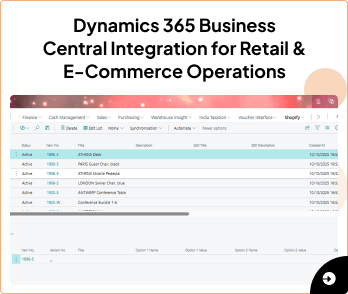
Implemented an omnichannel retail solution integrating POS systems, Shopify e-commerce, and Microsoft Dynamics 365 Business Central. The project enabled centralized control over inventory, sales, and financial operations, ensuring real-time visibility and seamless customer experience across all sales channels.
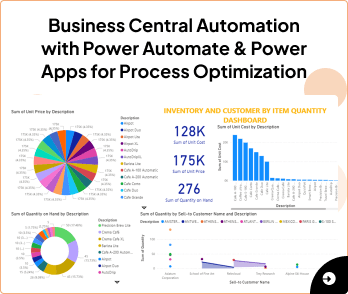
Developed InfraFlow, a business process automation solution leveraging Microsoft Dynamics 365 Business Central, Power Automate, and Power Apps to streamline core business operations. The solution focused on reducing manual effort, improving accuracy, and enabling real-time visibility across procurement, sales, and inventory processes.
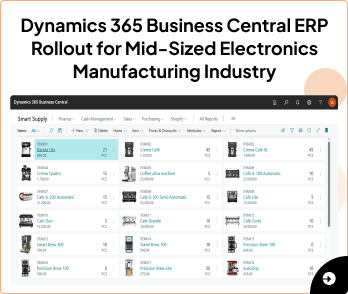
Led the end-to-end implementation of Microsoft Dynamics 365 Business Central for a mid-sized electronics manufacturing company. The project focused on replacing fragmented legacy systems with a unified ERP platform to streamline operations, improve visibility, and support scalable growth.