Case Overview
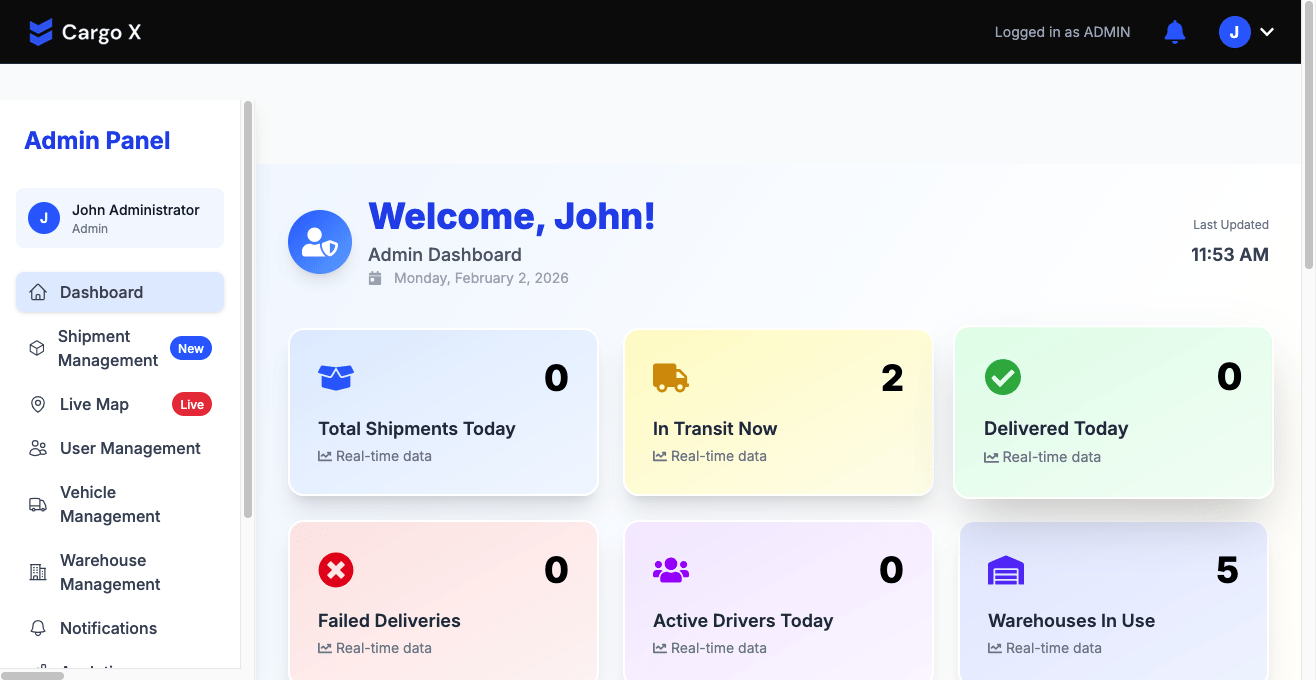
The Logistics & Shipment Management System is a modern digital platform designed to streamline end-to-end shipment and delivery operations. The project focuses on improving operational efficiency, enabling real-time shipment visibility, reducing delivery errors, and enhancing coordination between administrators, dispatchers, drivers, and customers through a centralized system.
Involvement
The Brief
The Logistics & Shipment Management System is a modern digital platform designed to streamline end-to-end shipment and delivery operations. The project focuses on improving operational efficiency, enabling real-time shipment visibility, reducing delivery errors, and enhancing coordination between administrators, dispatchers, drivers, and customers through a centralized system.
Problem Statement
Modern logistics operations often face several operational challenges:
- Fragmented shipment tracking systems
- Limited real-time visibility into deliveries
- Manual verification processes leading to errors
- Poor coordination between warehouses, dispatchers, and drivers
- Lack of automated alerts and notifications
- Difficulty managing multi-role access securely
- Inefficient cross-device usability
As logistics networks scale across multiple warehouses, routes, and teams, these issues lead to delivery delays, increased operational costs, reduced transparency, and customer dissatisfaction.
There was a need for a centralized, secure, and scalable logistics platform that enables real-time tracking, barcode-based shipment verification, automated notifications, and structured role-based access — all within a modern, responsive web application.
Solutions
To address these operational challenges, we designed and developed a comprehensive logistics management platform:
1. Centralized Shipment Management
- Unified dashboard for all shipments
- Create, update, assign, and monitor deliveries
- Multi-warehouse and route management
- Shipment lifecycle tracking (Created → Dispatched → In Transit → Delivered)
2. Real-Time Shipment & Driver Tracking
- Live driver location tracking using Leaflet Maps
- WebSocket-based real-time updates
- Instant shipment status synchronization
- Centralized monitoring dashboard
This provides complete operational visibility and faster issue resolution.
3. Barcode & QR Code Verification
- Barcode and QR code generation
- Shipment scanning for verification
- Secure validation before status updates
- Reduced manual delivery errors
This ensures accuracy in dispatch and delivery confirmation.
4. Automated Notifications & Alerts
- Real-time shipment status alerts
- Delivery confirmations
- Delay notifications
- System-triggered alerts for operational updates
Improves communication between logistics teams and customers.
5. Secure Role-Based Access Control (RBAC)
- JWT-based authentication
- Role-based system access (Admin, Dispatcher, Driver, Customer)
- Secure API endpoint protection
- Data access restriction based on roles
Ensures operational security and controlled access.
6. Responsive & Cross-Device Compatibility
- Fully responsive UI
- Works seamlessly across desktop and mobile devices
- Clean, professional interface aligned with logistics industry standards
7. Scalable & Production-Ready Architecture
- PostgreSQL with UUID extensions
- WebSocket real-time architecture
- Modular backend services using Go & Gin
- Optimized database queries with GORM
Our Approach
We carefully structured the site to prioritize gentle guidance and informed choice. Key components include:
- Studied real-world logistics operations
- Defined user roles and responsibilities
- Identified shipment lifecycle workflows
- Designed PostgreSQL schema
- Implemented UUID-based entity management
- Created scalable relational structures
- Developed RESTful APIs using Go & Gin
- Implemented GORM for ORM-based database handling
- Integrated WebSockets for live updates
- JWT authentication and RBAC implementation
- Built SPA using React (Vite)
- Responsive UI with Tailwind CSS
- Integrated Axios for API communication
- Map integration using Leaflet
- WebSocket-based live driver tracking
- Instant shipment status updates
- Optimized event handling for performance
- Iterative testing cycles
- Performance optimization
- Production deployment on VPS server
1. Requirement Analysis & Workflow Mapping
2. Database Architecture
3. Backend Development
4. Frontend Implementation
5. Real-Time System Design
6. Testing & Deployment
Tools Used
- React (Vite)
- Tailwind CSS
- Axios
- Leaflet (Maps & Tracking)
- Go
- Gin Framework
- GORM
- PostgreSQL (UUID Extensions)
- WebSockets
- JWT Tokens
- Role-Based Access Control
- Barcode & QR Code Generation & Storage
Frontend
Backend
Database
Real-Time Communication
Authentication & Security
File Handling
The Results
1) Improved operational efficiency through centralized shipment management
2) Real-time visibility into shipment status and driver locations
3) Reduced delivery errors using barcode verification
4) Enhanced customer experience with transparent tracking
5) Scalable architecture supporting multiple warehouses and routes
6) Secure role-based access ensuring data protection
Related Projects
- Customer Mobile App (Android & iOS)
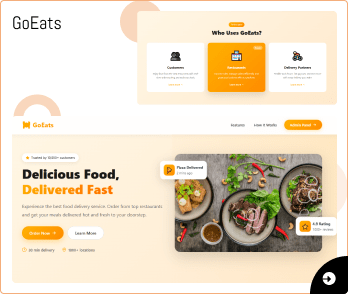
- Restaurant Partner App
- Delivery Partner App
- Admin Web Panel
The backend is built using GoLang microservices architecture, optimized for scalability, reliability, and real-time data processing, while the frontend is implemented using React Native and React.js to deliver fast, intuitive, and responsive user experiences across devices.
GoEats enables customers to browse restaurants, explore menus, place orders, make secure payments, and track deliveries in real time. Restaurants can manage menus, orders, availability, and profiles efficiently, while delivery partners receive optimized task assignments and live navigation support.
The admin panel provides centralized control over onboarding, vendor management, order monitoring, financial settlements, and business analytics.