



CASE STUDY DETAILS
PulseIQ
Project Type
Web Application
Challenge
Fragmented Remote Patient Monitoring
Domain
Healthcare
Impact
Real-Time Patient Health Monitoring
OVERVIEW
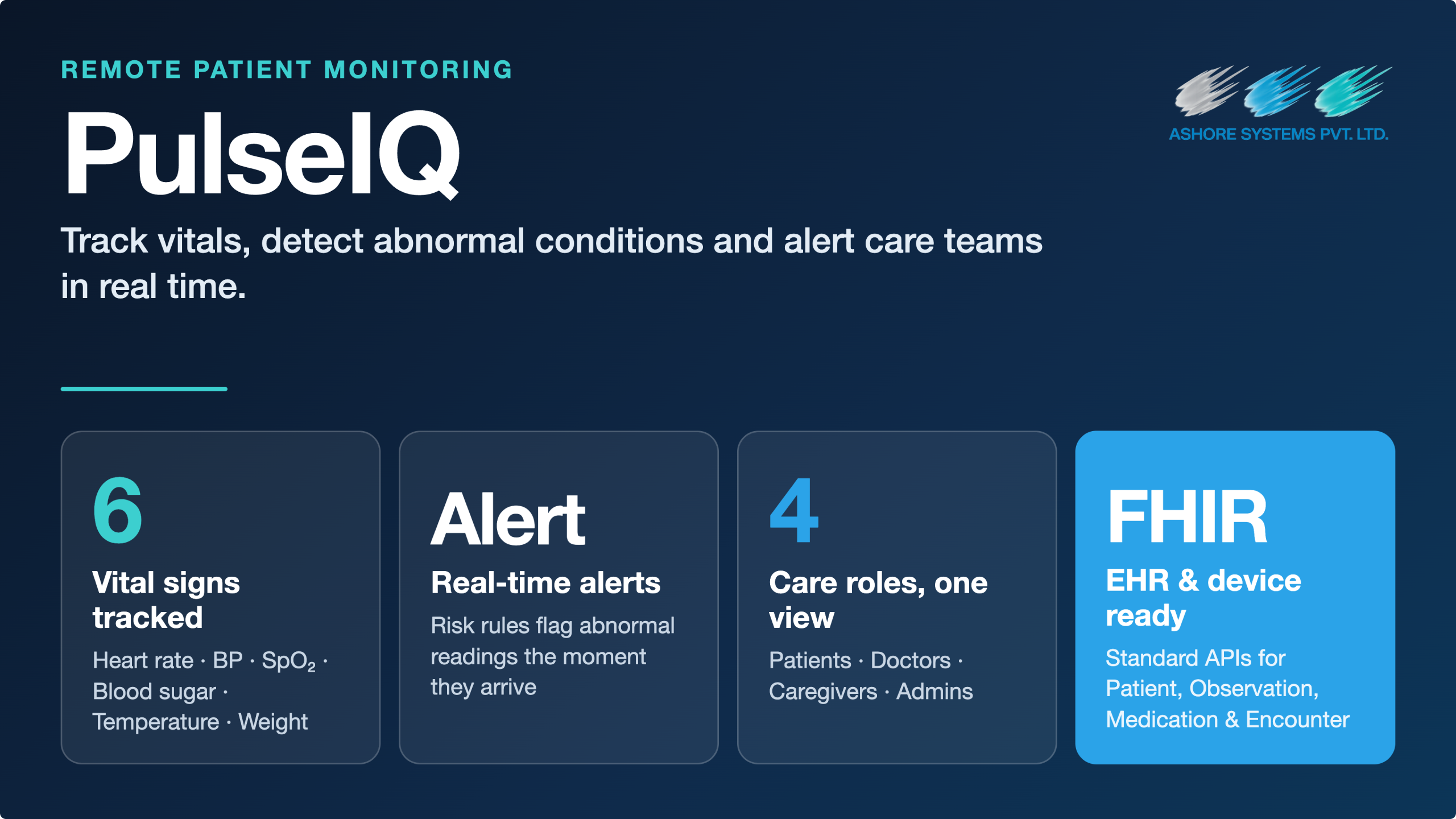
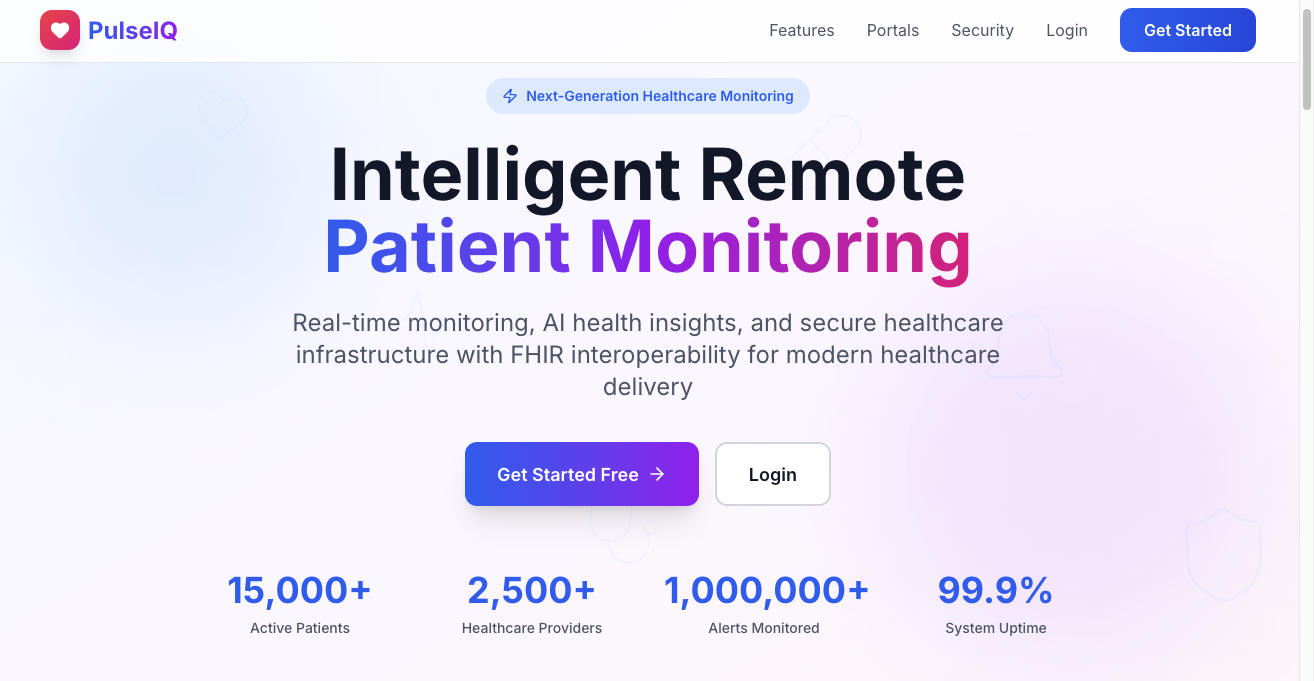
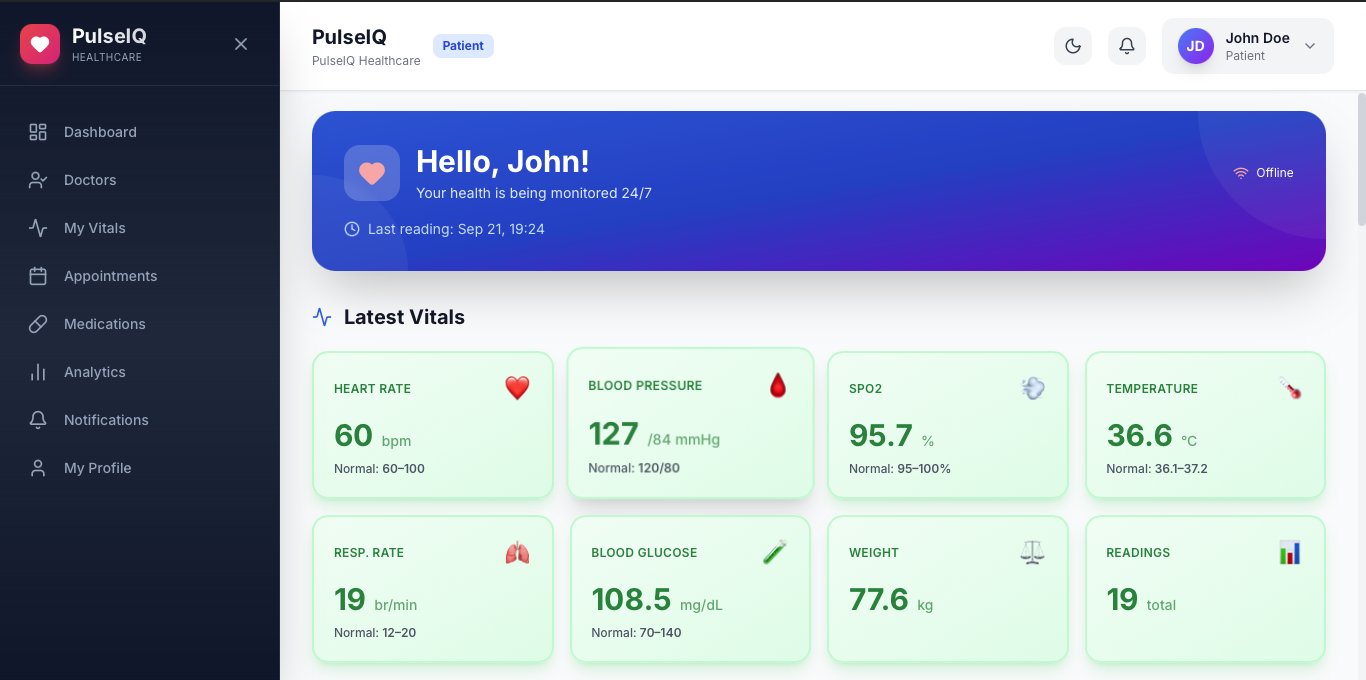
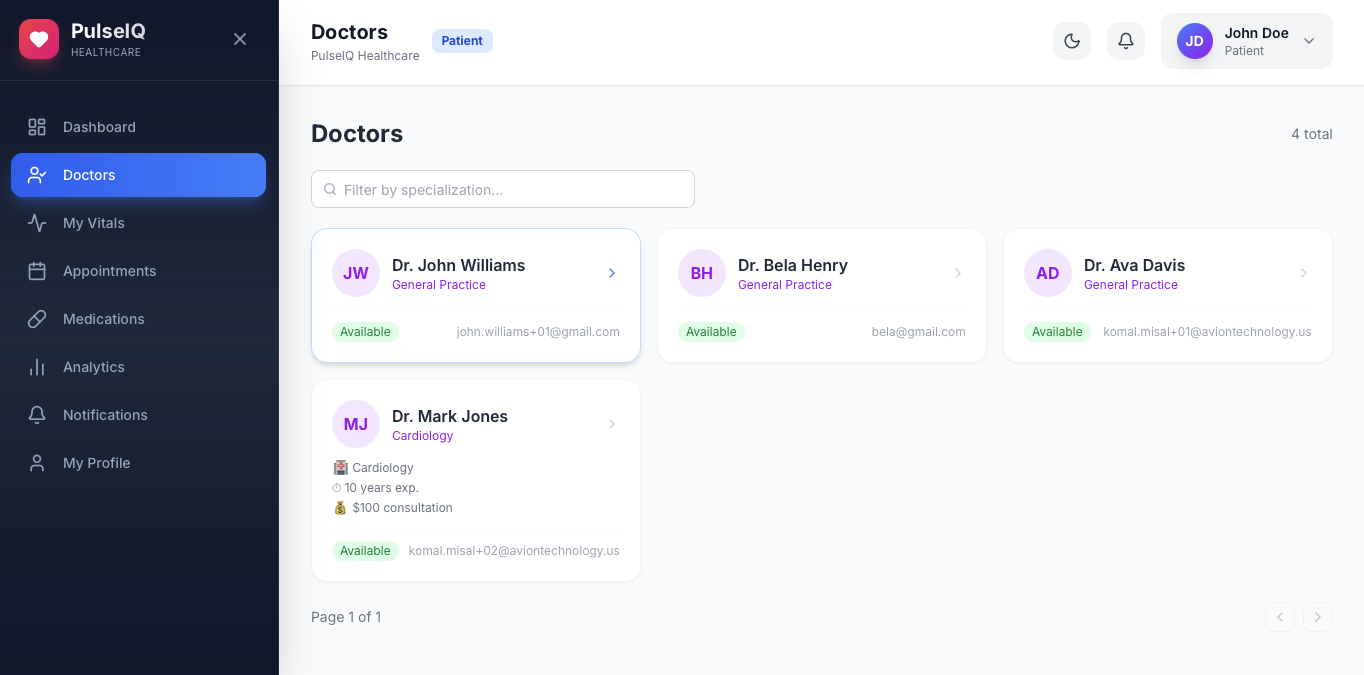
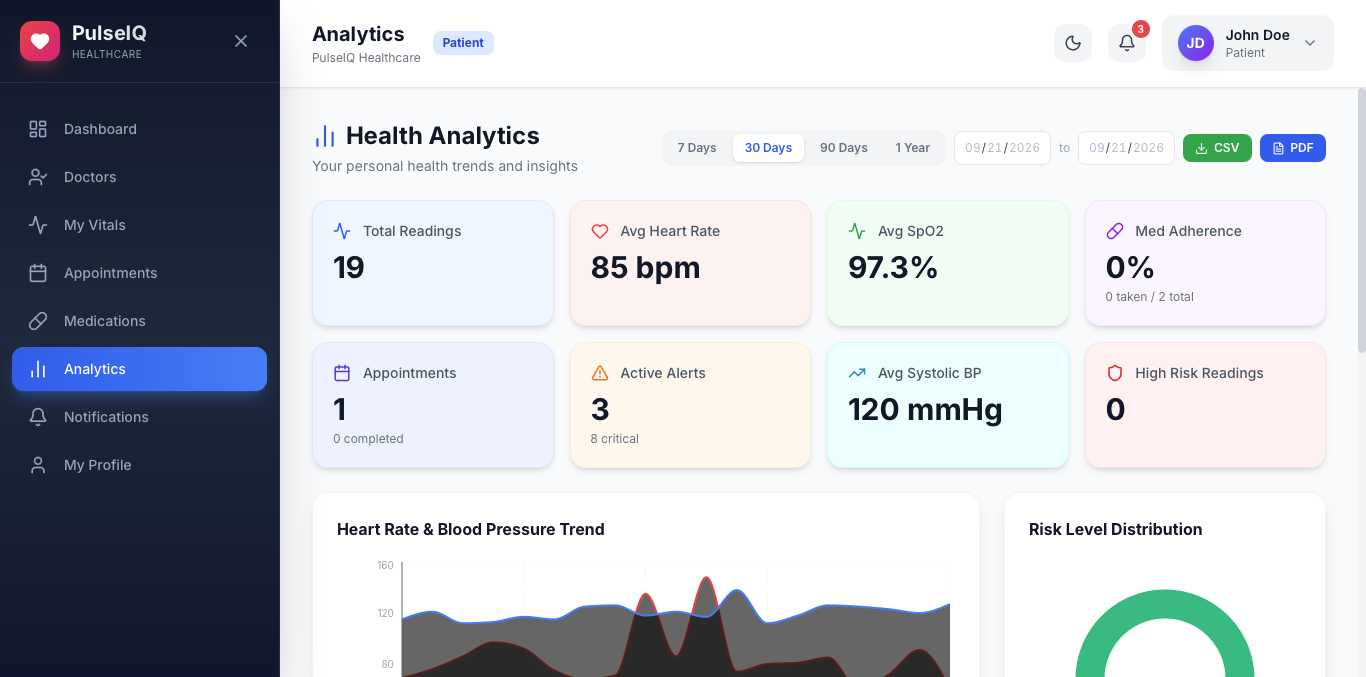
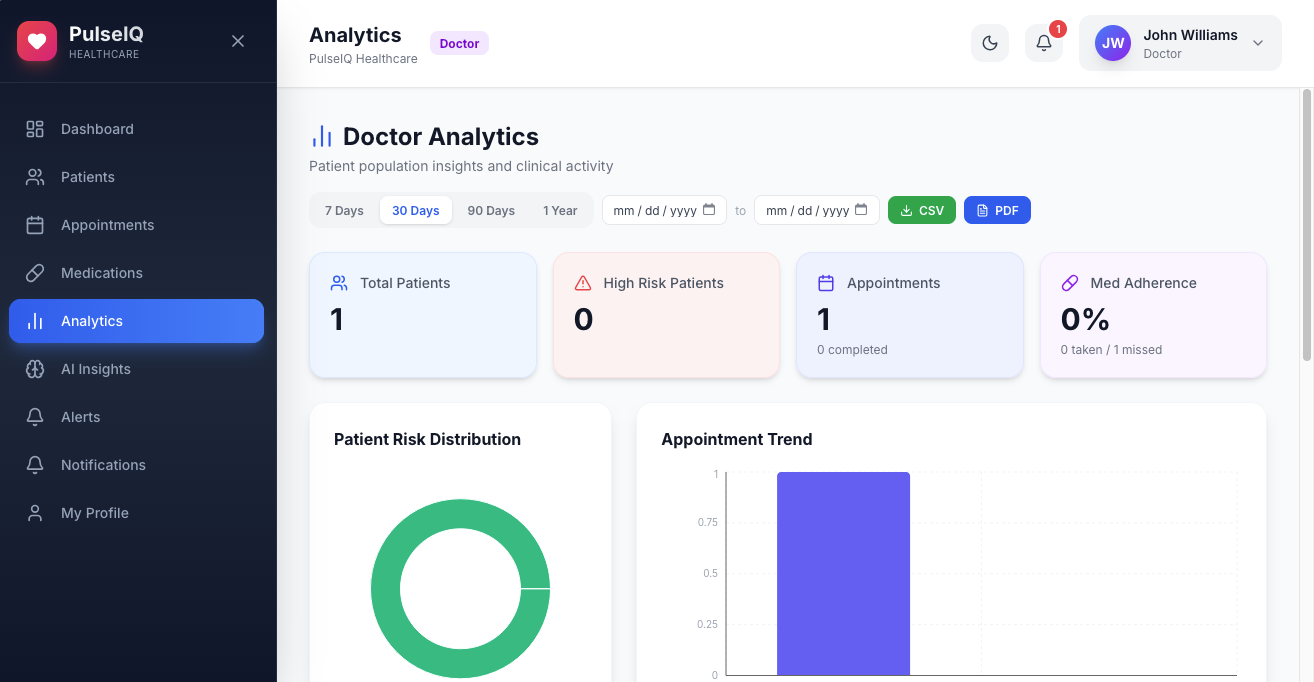
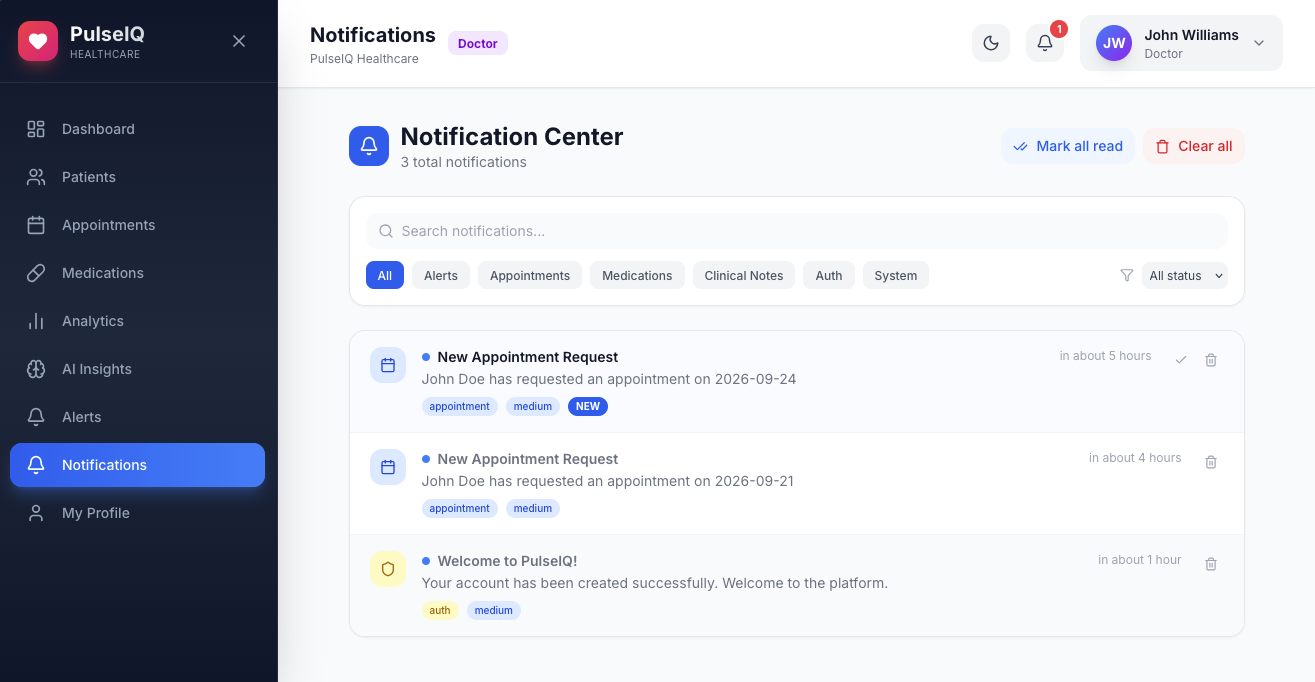
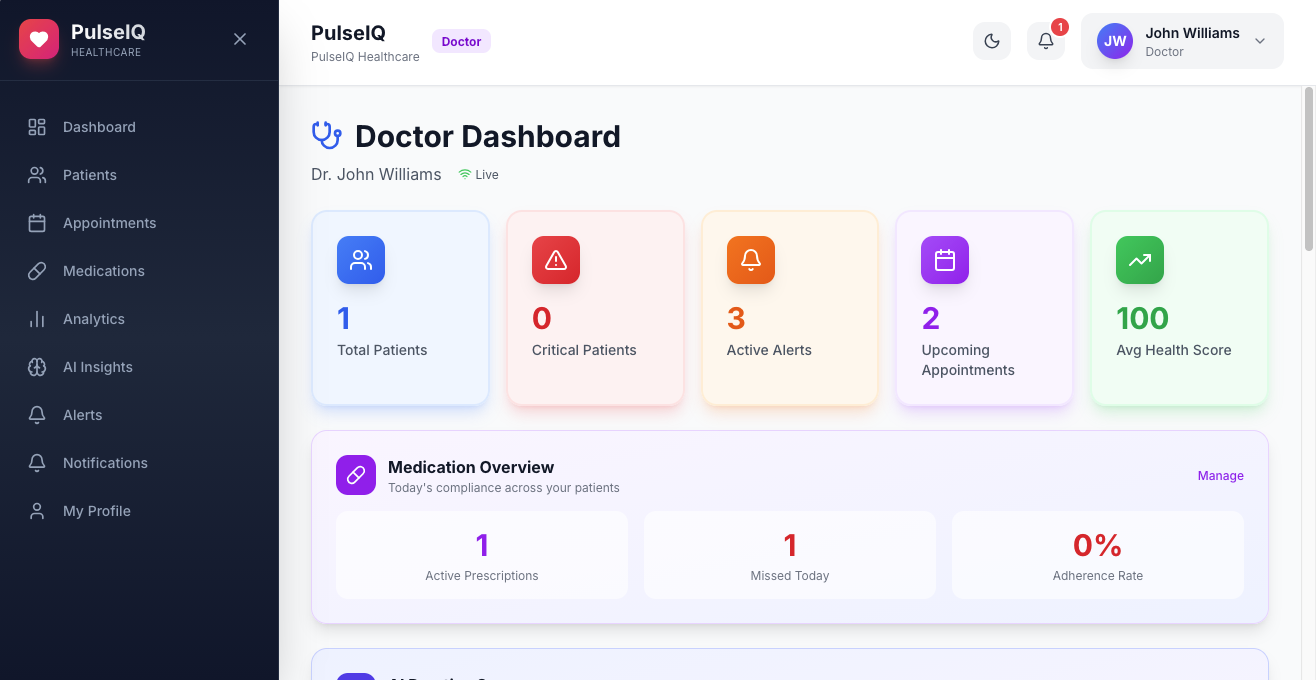
PulseIQ is a modern, secure, and scalable Remote Patient Monitoring (RPM) platform designed to help healthcare organizations remotely monitor patient health, track vital signs, identify abnormal conditions, manage alerts, and support coordination between patients and healthcare professionals.
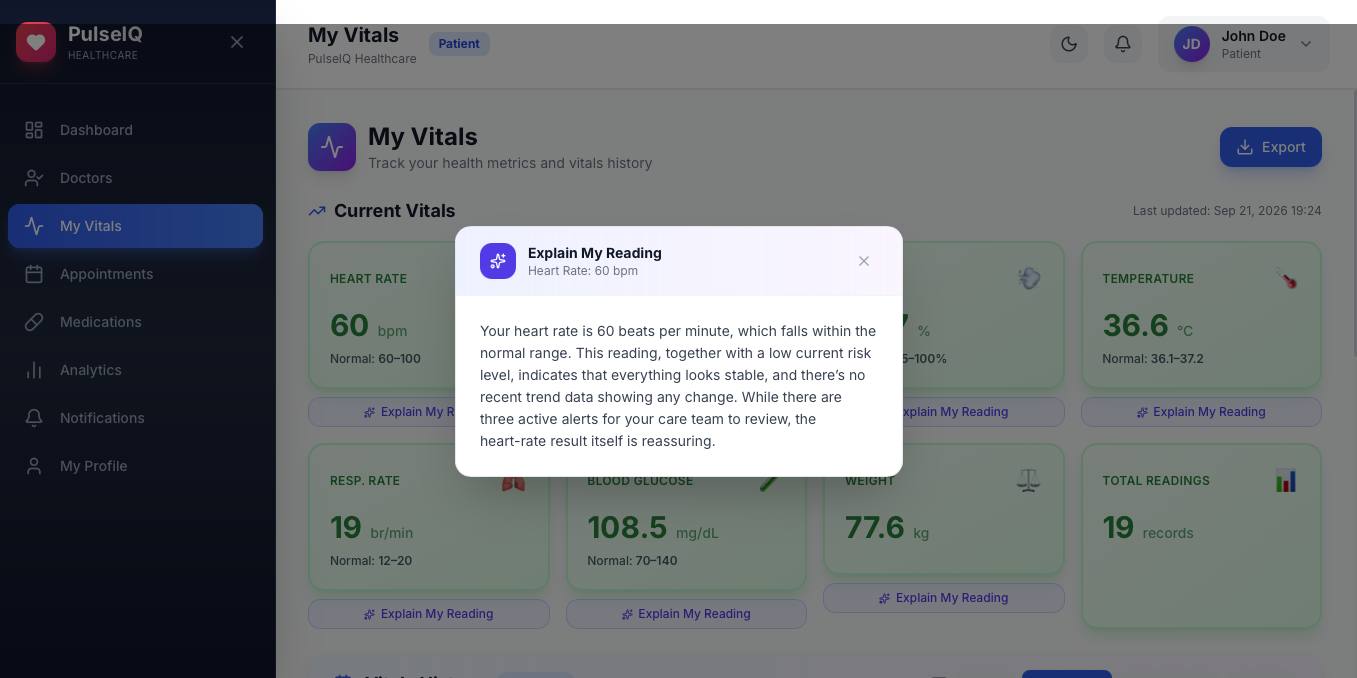
The platform provides real-time monitoring of vital signs such as heart rate, blood pressure, SpO₂, blood sugar, temperature, and weight. It combines automated risk assessment, real-time alerts, role-based dashboards, clinical information management, and healthcare interoperability capabilities to support continuous patient monitoring outside traditional healthcare facilities.
PROBLEM
Healthcare organizations need reliable solutions to monitor patients remotely while maintaining timely access to health information, alerts, and clinical data:
The challenge was to develop a centralized remote patient monitoring platform that could securely collect and process patient health data, identify potential risks, deliver real-time alerts, and support healthcare teams in monitoring patients remotely.
- Limited ability to continuously monitor patients outside healthcare facilities
- Manual collection and tracking of patient vital information
- Delayed identification of abnormal health conditions
- Difficulty managing patient alerts and coordinating healthcare responses
- Fragmented management of clinical notes, medications, appointments, and patient information
- Need for secure, scalable, and role-based access to sensitive healthcare dcompliance
SOLUTIONS
1. Comprehensive Patient Health Monitoring
- Enabled monitoring of heart rate, blood pressure, SpO₂, blood sugar, temperature, and weight.
- Stored historical vital readings for ongoing patient health monitoring.
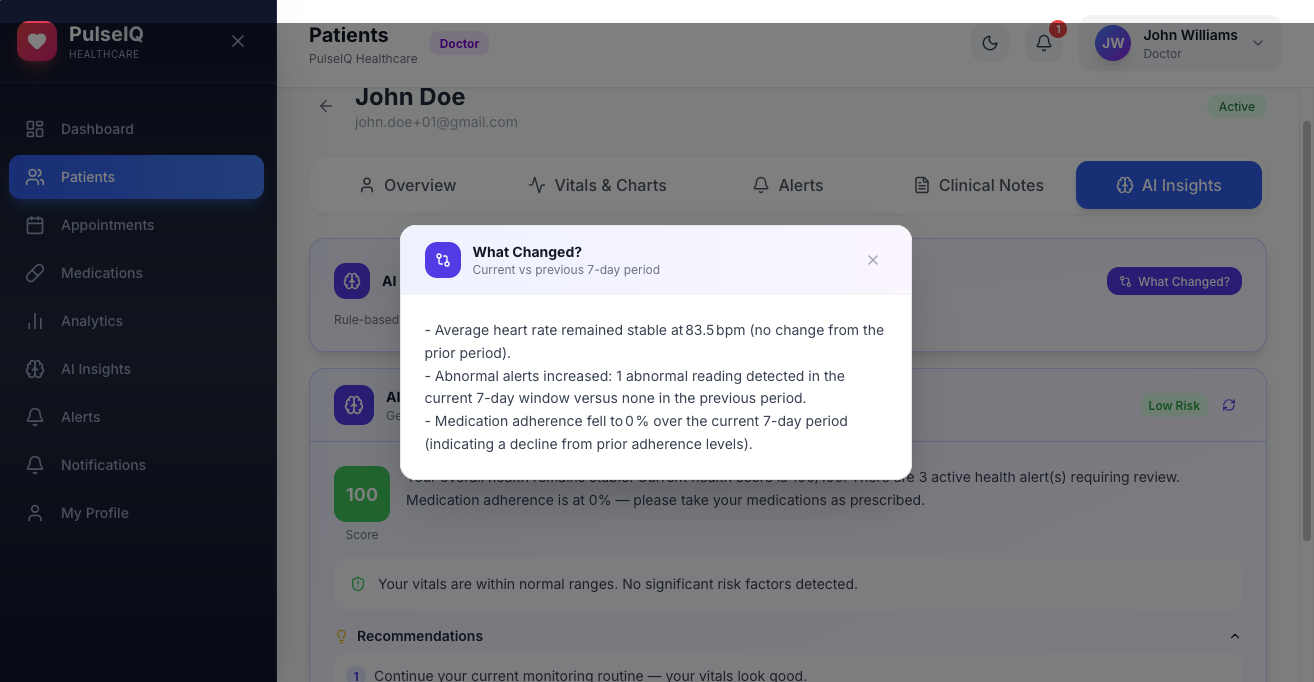
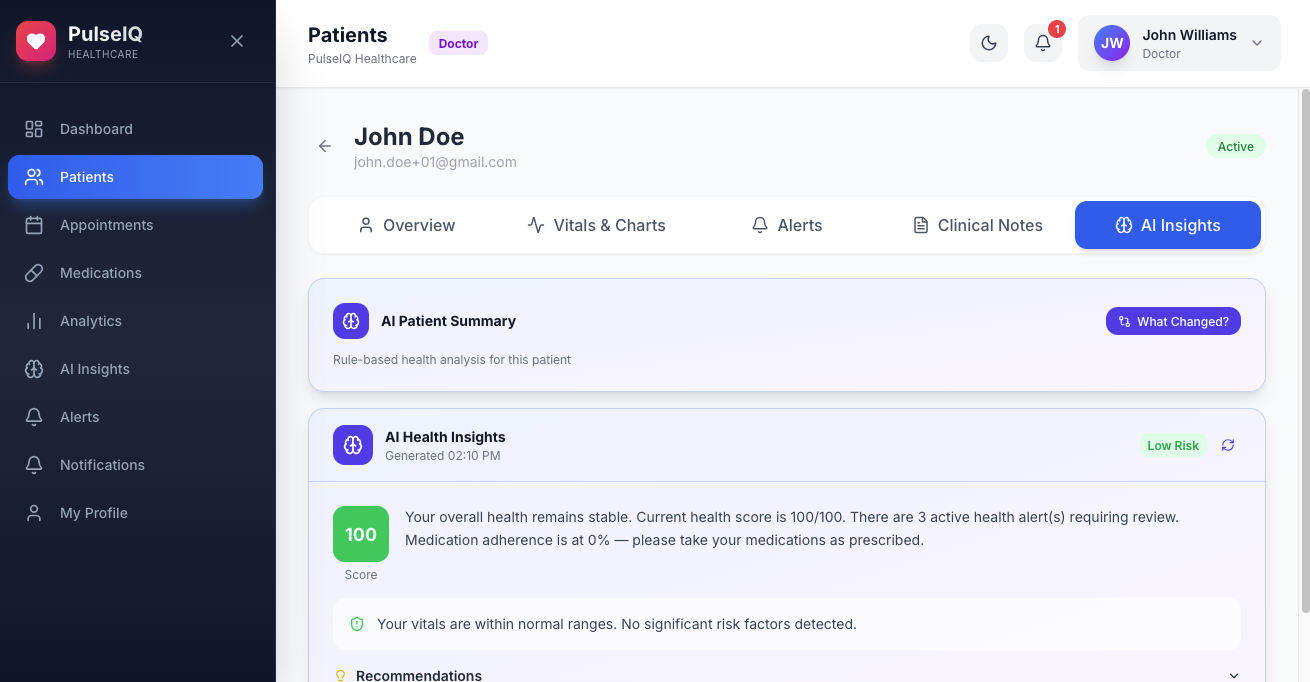
- Provided centralized dashboards for viewing health information, alerts, and risk status.
- Automated the processing and storage of incoming health readings.
3. Integrated Healthcare Management
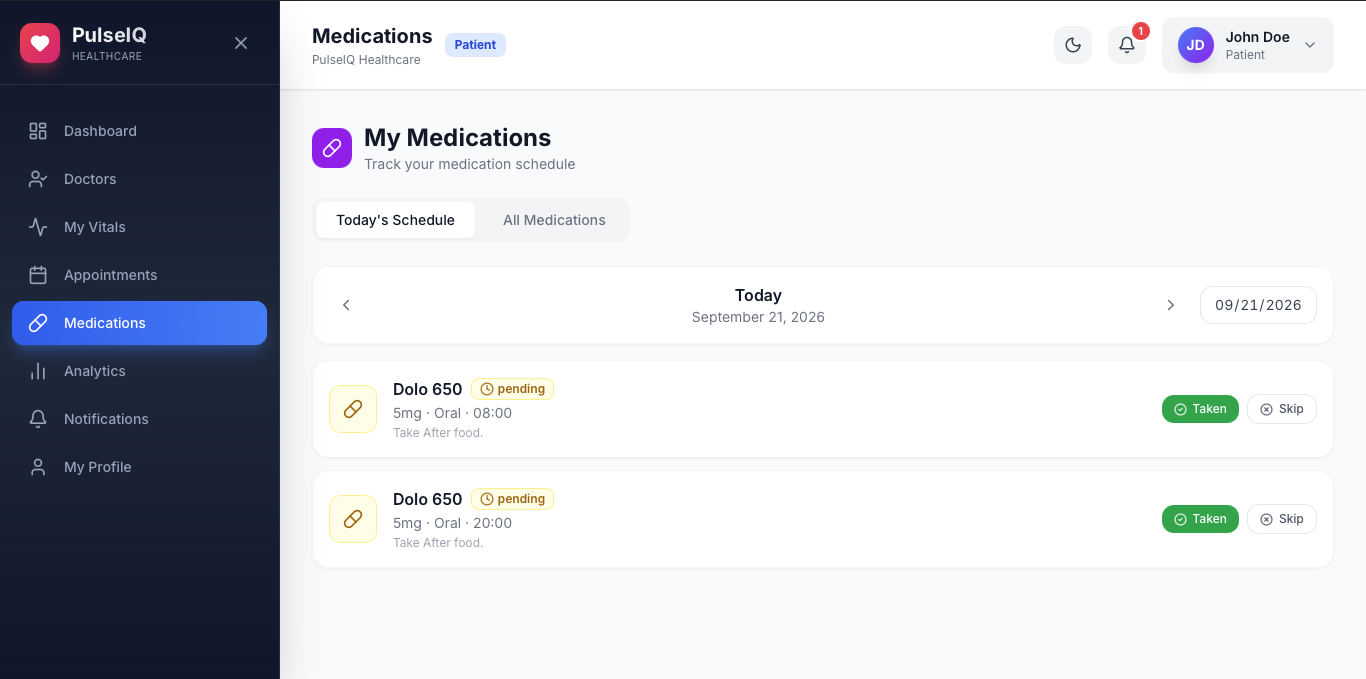
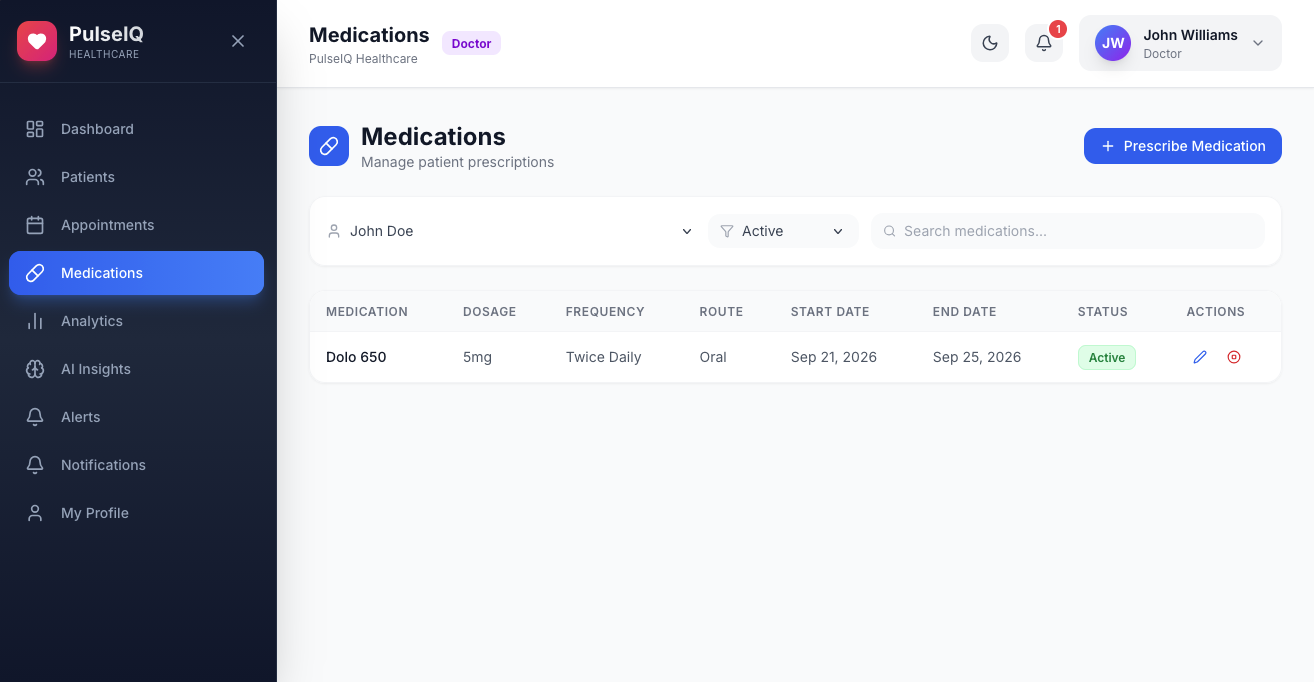
- Provided medication management for prescriptions, schedules, and reminders.
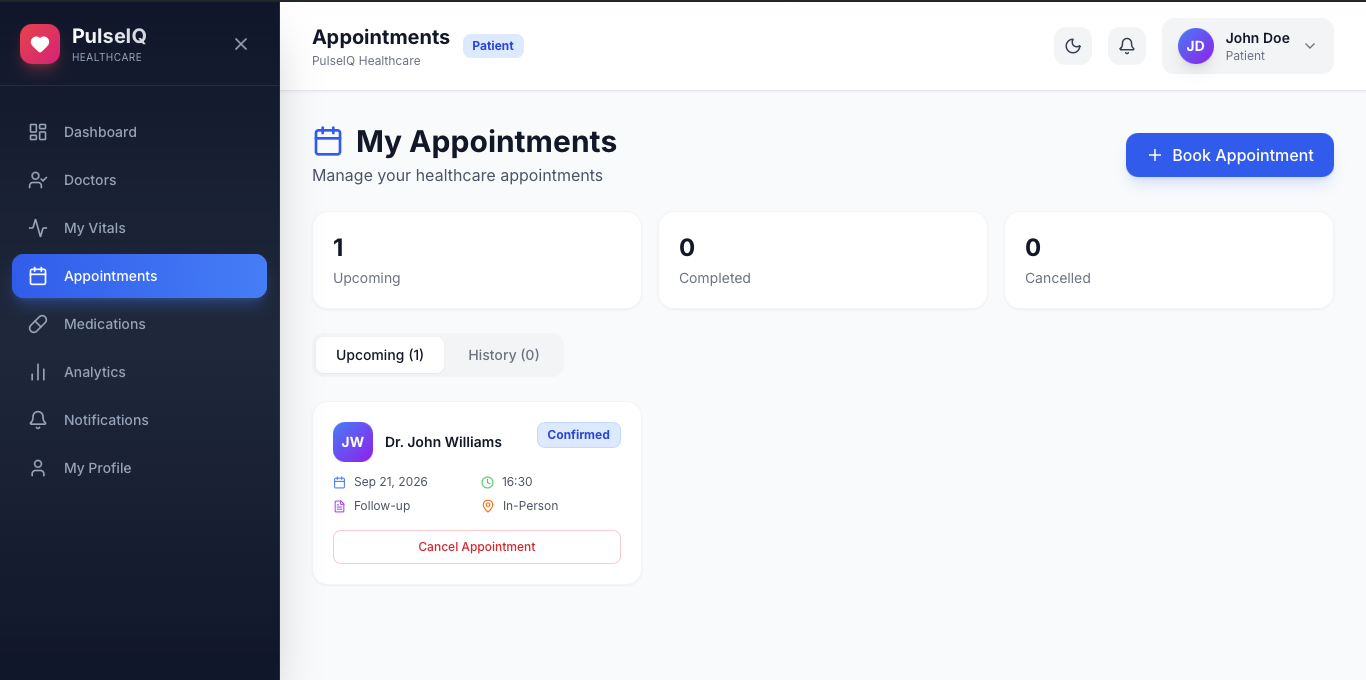
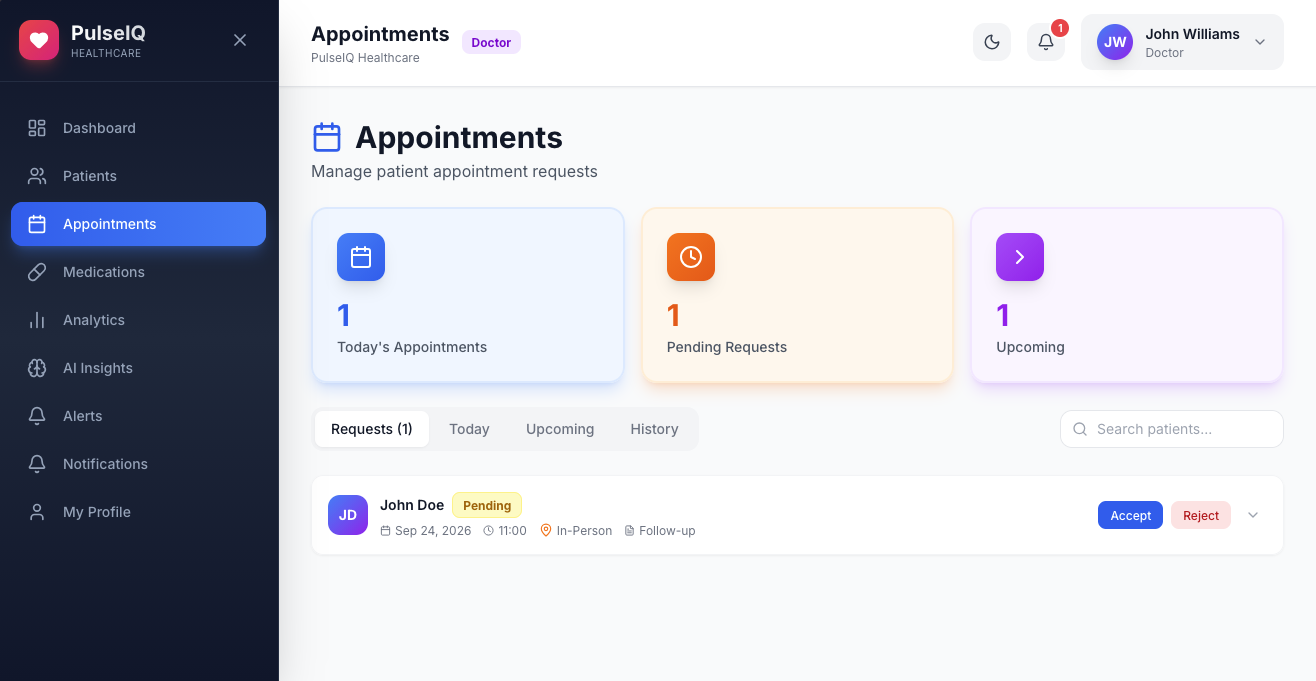
- Supported appointment information management for patients and healthcare teams.
- Enabled authorized healthcare professionals to create and manage clinical notes.
- Provided dedicated workflows based on healthcare user roles.
5. Security, Access Control & Auditability
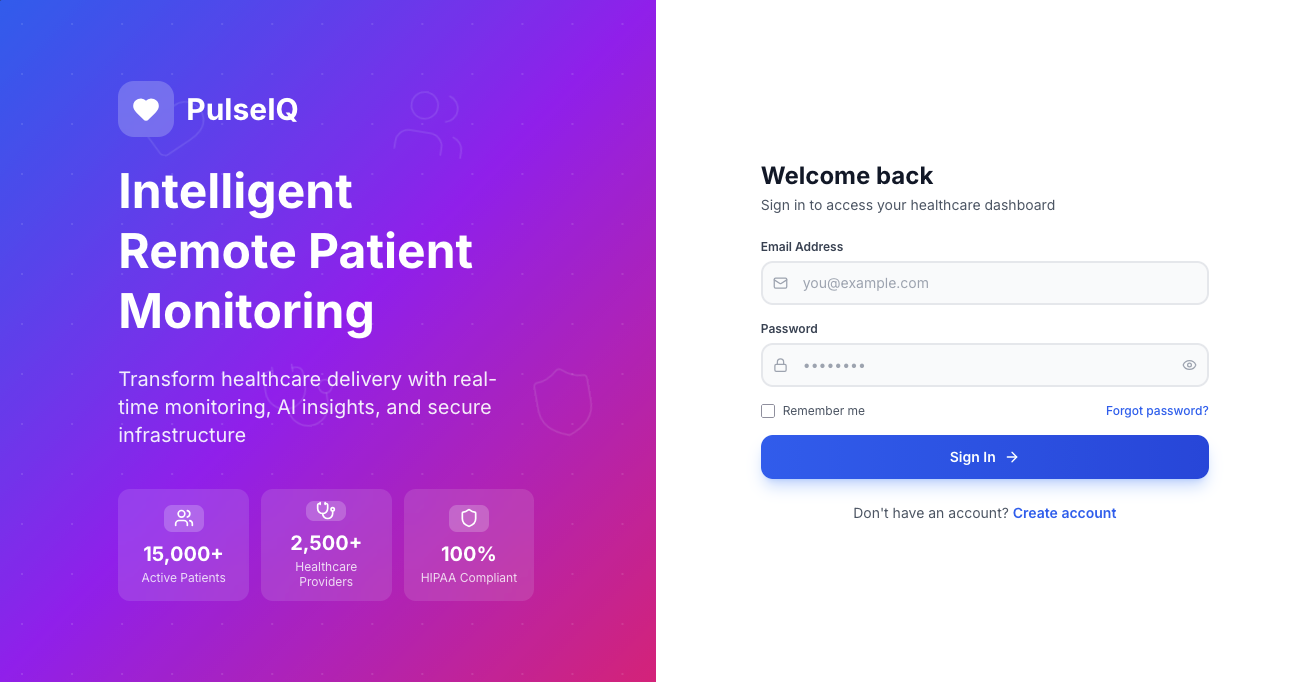
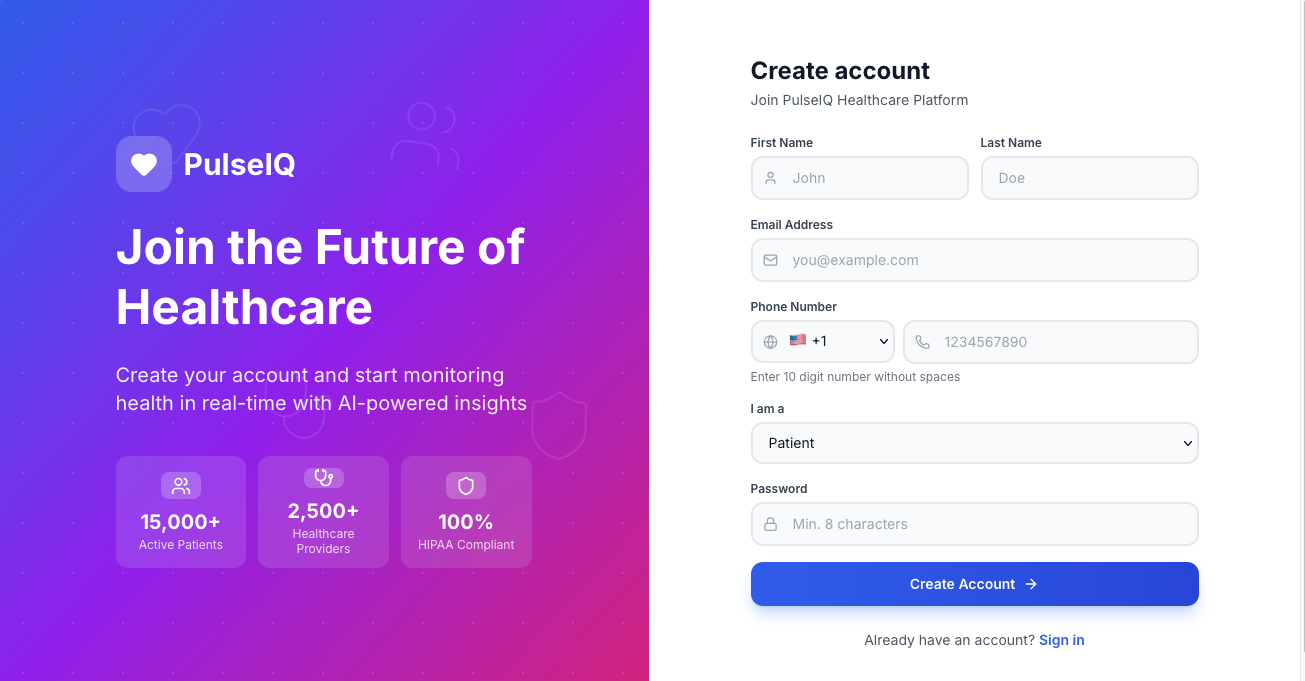
- Implemented role-based access for patients, doctors, caregivers, and administrators.
- Protected authenticated healthcare workflows through secure authentication mechanisms.
- Added audit logging capabilities to track sensitive healthcare activities.
- Controlled access to patient and healthcare information through authorized application workflows.
7. Secure Healthcare Operations
- Role-Based Access Control (RBAC) via Pundit policies
- JWT + AWS Cognito authentication
- Secure patient record management
- Audit logging and activity tracking
- Encrypted storage (S3, RDS, KMS)
- HIPAA-oriented architecture design
2. Real-Time Monitoring & Risk Detection
- Enabled real-time delivery of new patient vital readings.
- Evaluated vital readings using configurable health-risk rules.
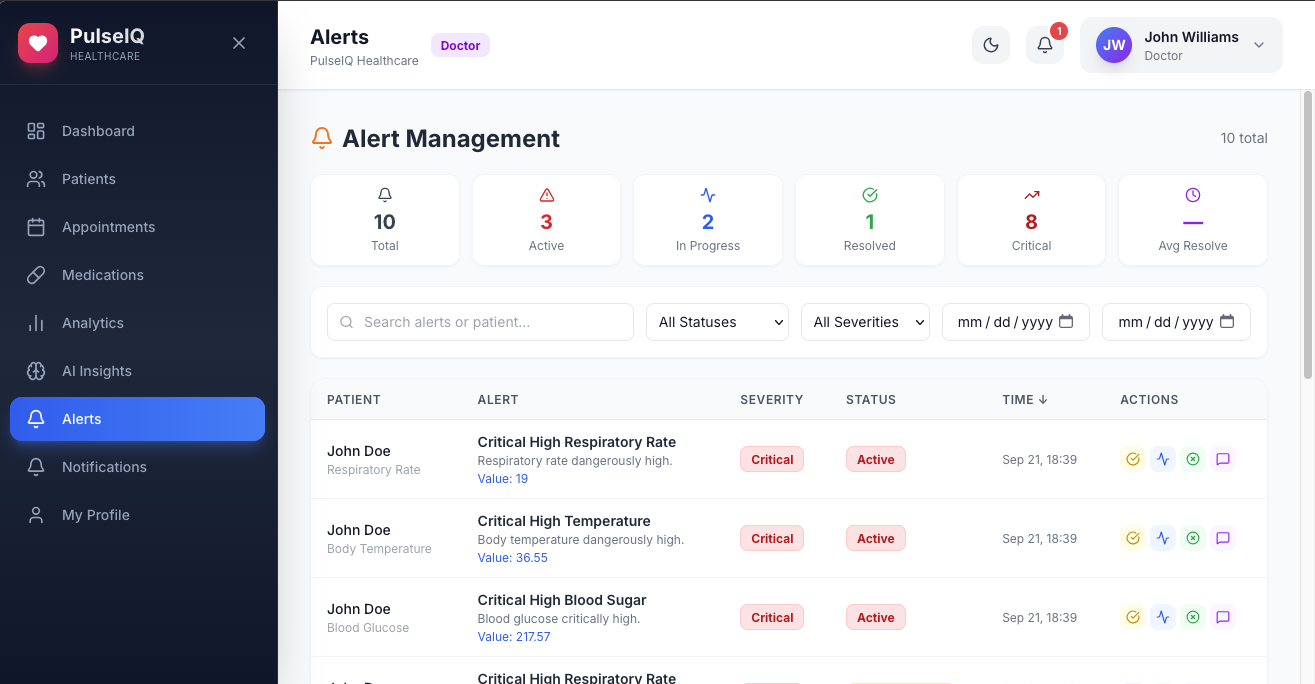
- Automatically generated alerts based on applicable risk conditions.
- Enabled healthcare professionals to review, acknowledge, track, and resolve patient alerts.
4. Healthcare Interoperability & Integration Readiness
- Provided FHIR-ready APIs for standardized healthcare resources such as Patient, Observation, Medication, and Encounter.
- Established standardized healthcare data structures for integration with external healthcare systems and EHR platforms.
- Designed the platform to support future integration with connected medical devices and device gateways.
- Maintained a modular architecture for additional healthcare integrations.
6. Scalable Healthcare Platform
- Designed a scalable architecture to support concurrent patient monitoring and healthcare operations.
- Provided reliable storage for patient profiles, vital readings, alerts, medications, appointments, and clinical information.
- Included caching capabilities for frequently accessed application data.
- Structured the platform to support future healthcare integrations, analytics, and AI capabilities.
APPROACH
Our Approach
Healthcare Requirements
- Identified key remote patient monitoring requirements and healthcare workflows.
- Defined patient monitoring, alert management, and healthcare coordination requirements.
- Established role-based workflows for patients and healthcare professionals.
System Design
- Designed a modular architecture for patient monitoring and healthcare management.
- Structured application components to support concurrent patient monitoring operations.
Real-Time Monitoring
- Designed workflows for receiving and processing patient vital readings.
- Implemented real-time communication for dashboard updates.
- Integrated risk evaluation into the vital-data processing workflow.
Healthcare Feature
- Developed workflows for vital monitoring and historical health data.
- Implemented medication, appointment, and clinical-note management capabilities.
- Created role-based dashboards for healthcare users.
Security, Integration
- Implemented role-based authorization and secure authentication.
- Added audit-logging mechanisms for sensitive healthcare activities.
- Designed the platform for future medical-device and EHR integrations.
SUCCESS AND IMPACT
What Was Achieved
- Centralized remote monitoring of patient health information.
- Improved visibility into patient vital signs and historical health readings.
- Automated identification of abnormal health conditions through risk rules.
- Faster visibility of critical patient alerts through real-time monitoring.
- Streamlined management of medications, appointments, and clinical notes.
- Role-based access to healthcare information and workflows.
- Established a foundation for healthcare interoperability.
- Created an extensible architecture for future medical-device, analytics, and AI integrations.
By Business
- Improved Remote Monitoring: Enabled healthcare teams to monitor patients remotely and access ongoing health information.
- Faster Alert Visibility: Enabled abnormal readings and critical alerts to reach authorized healthcare users quickly.
- Reduced Manual Monitoring Effort: Automated data processing and risk evaluation reduced dependency on manual health-data tracking.
- Better Healthcare Coordination: Centralized patient information, alerts, medications, appointments, and clinical notes supported coordinated workflows.
- Improved Data Accessibility: Role-based dashboards provided healthcare users with relevant patient information according to their permissions.
- Integration Readiness: Standardized healthcare APIs and modular architecture established a foundation for external healthcare integrations.
- Scalable Healthcare Platform: The modular architecture provided a foundation for expanding remote monitoring capabilities.
Phone
+1 (224) 209-9860Address
1600 McConnor Parkway,
Suite 125, Schaumburg, IL 60173

Schedule a free consultation
Phone
+1 (224) 209-9860Address
1600 McConnor Parkway,
Suite 125, Schaumburg, IL 60173