



CASE STUDY DETAILS
Hospital Resource Optimizer
Project Type
Web Platform
Challenge
Fragmented Hospital Resource Management
Domain
Healthcare
Impact
Intelligent Resource Planning & Operational Visibility
OVERVIEW
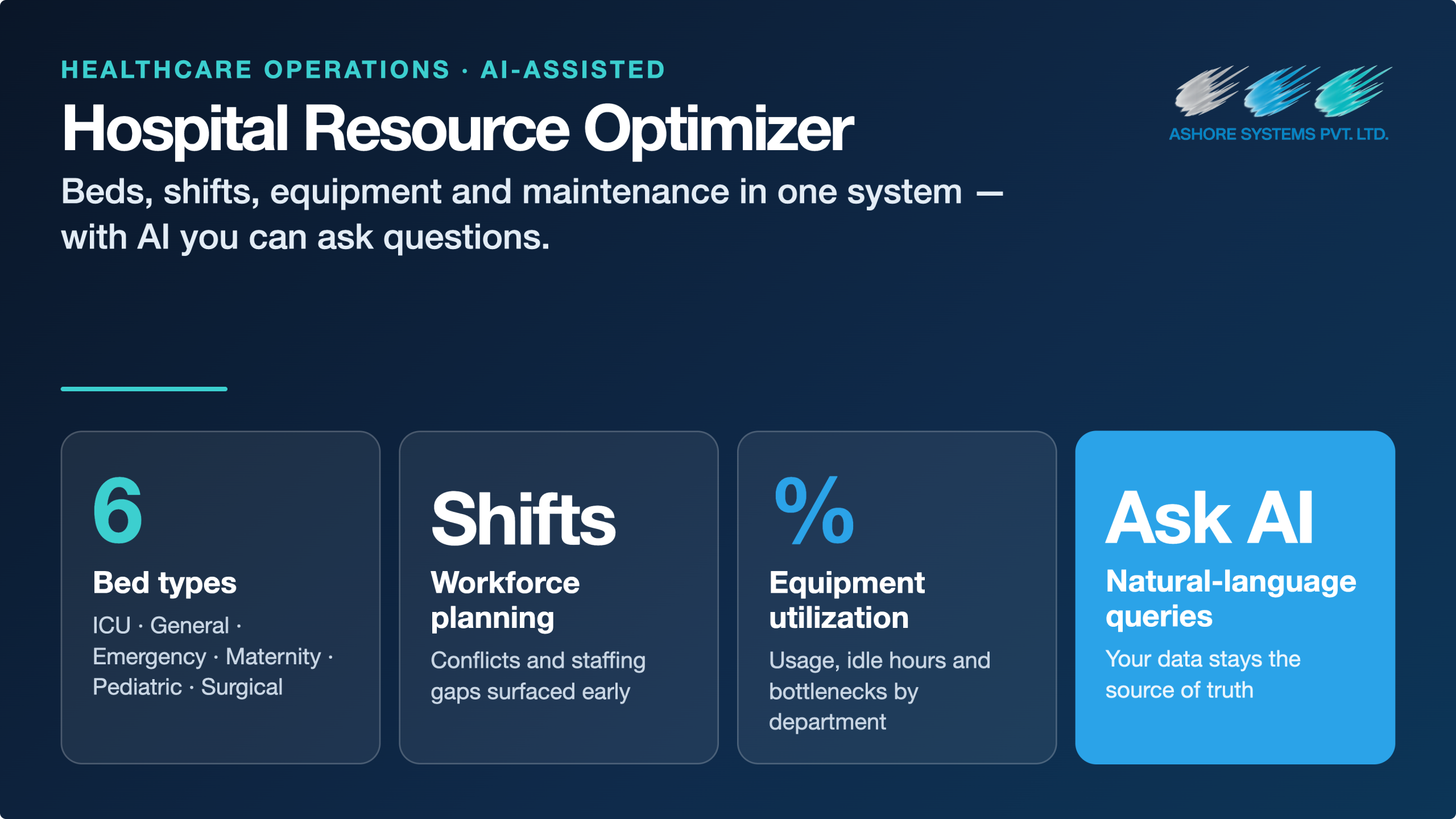
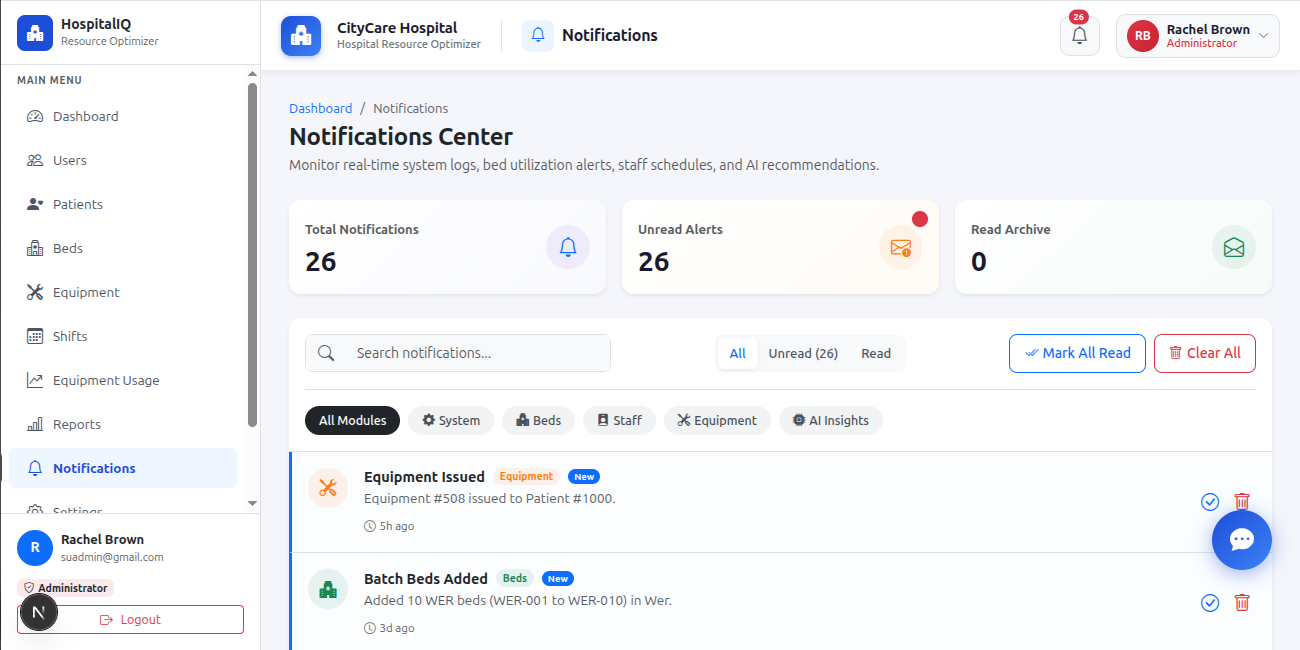
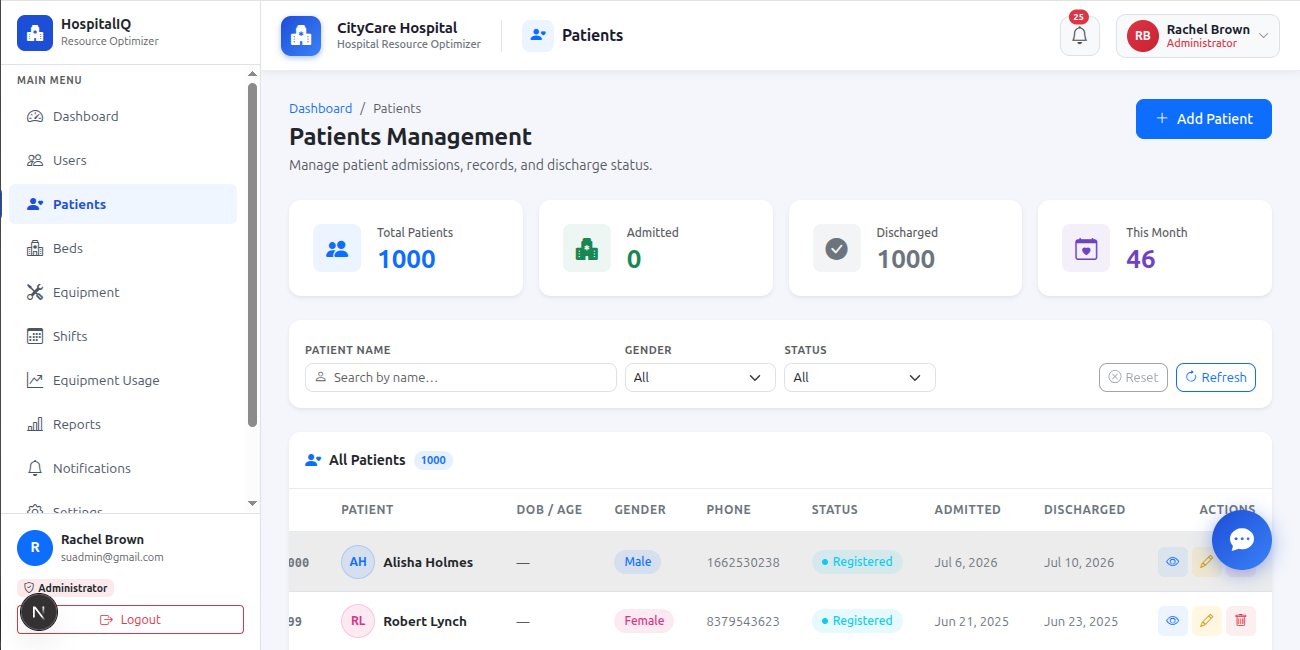
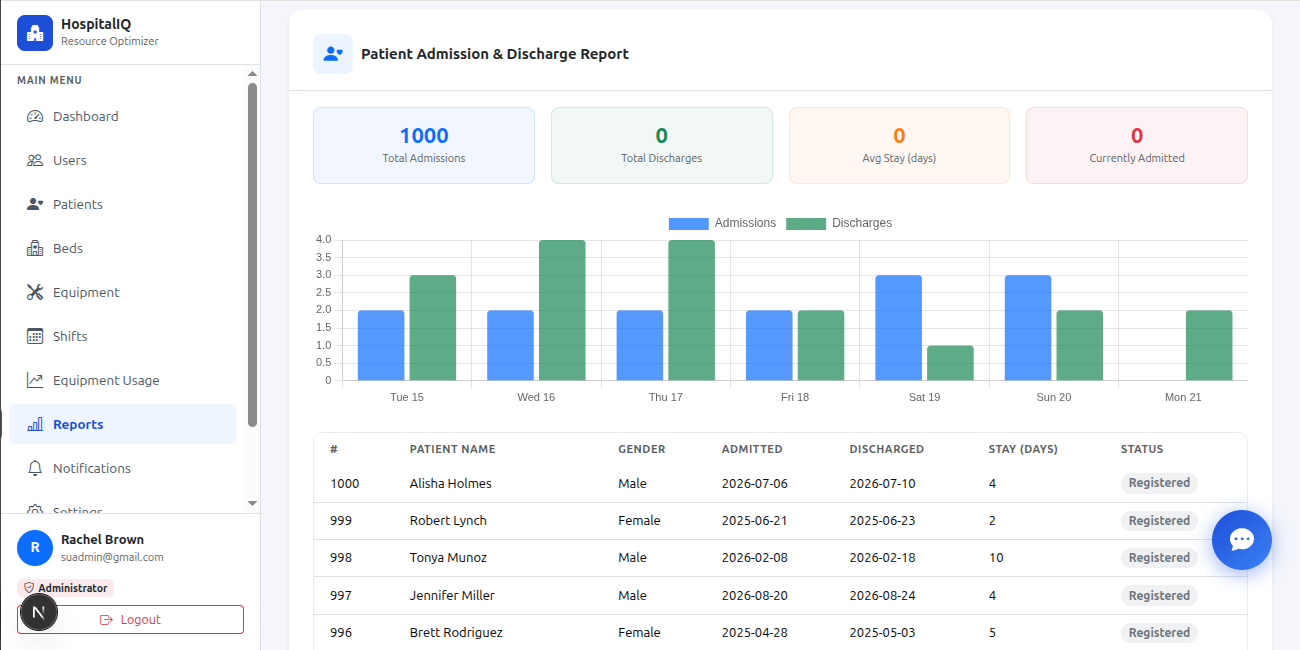
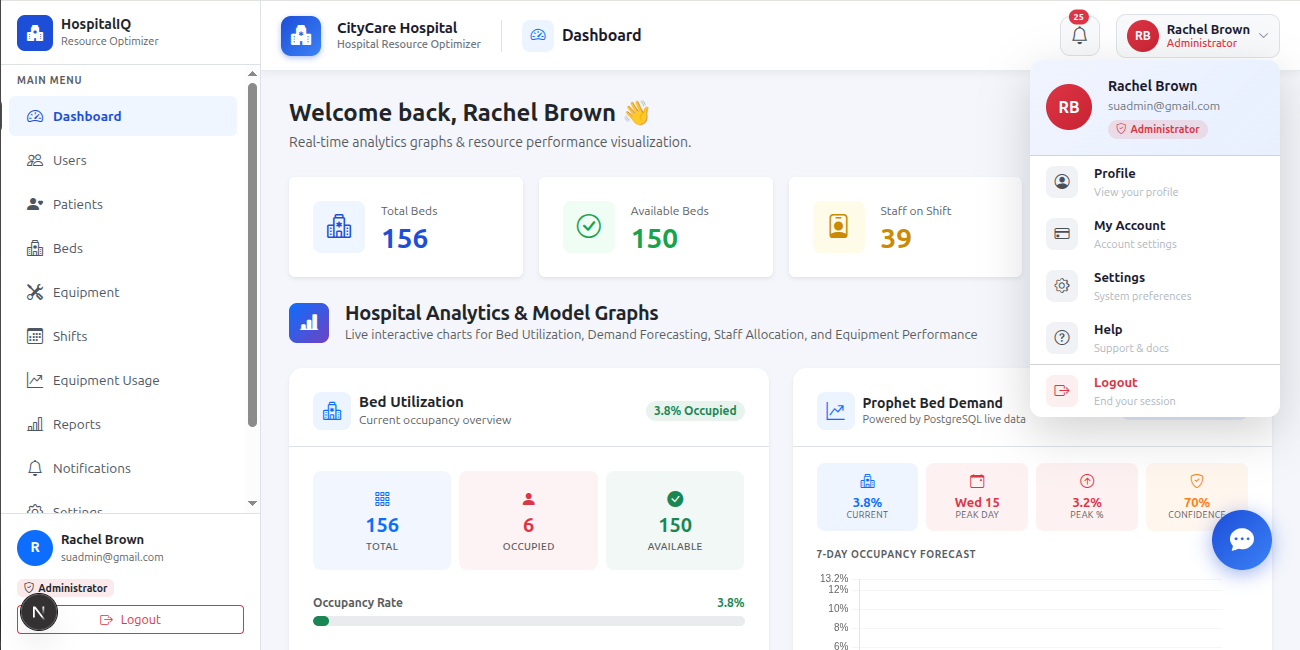
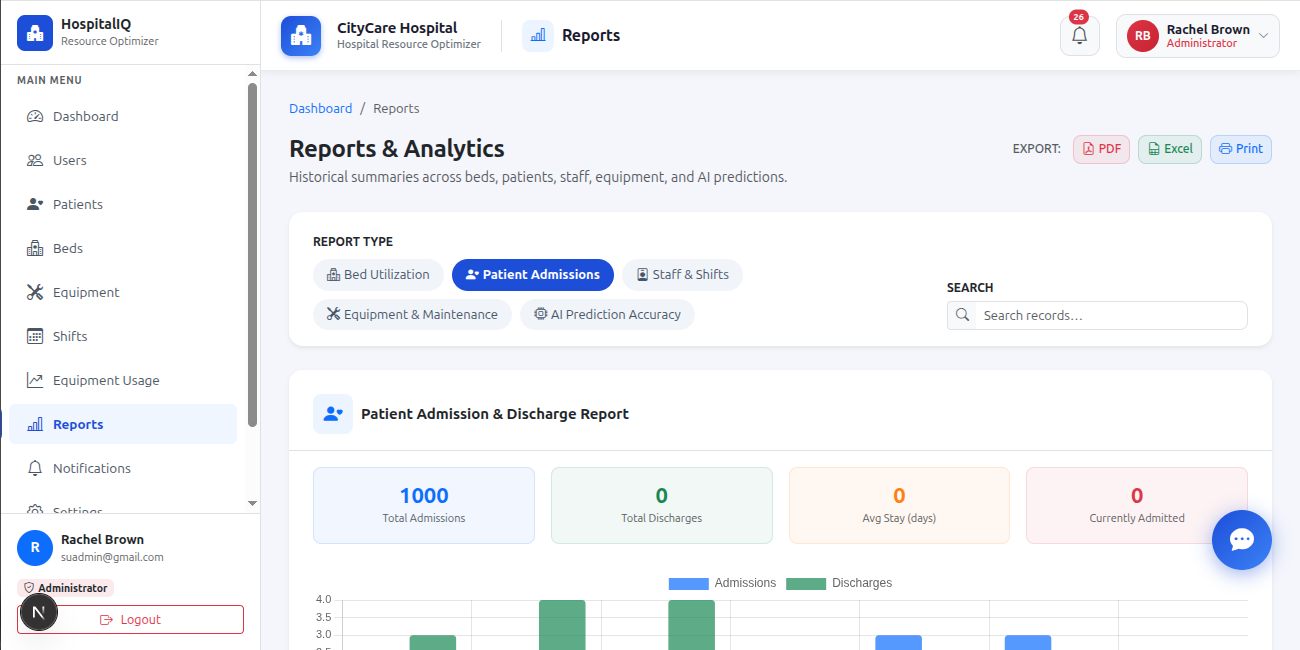
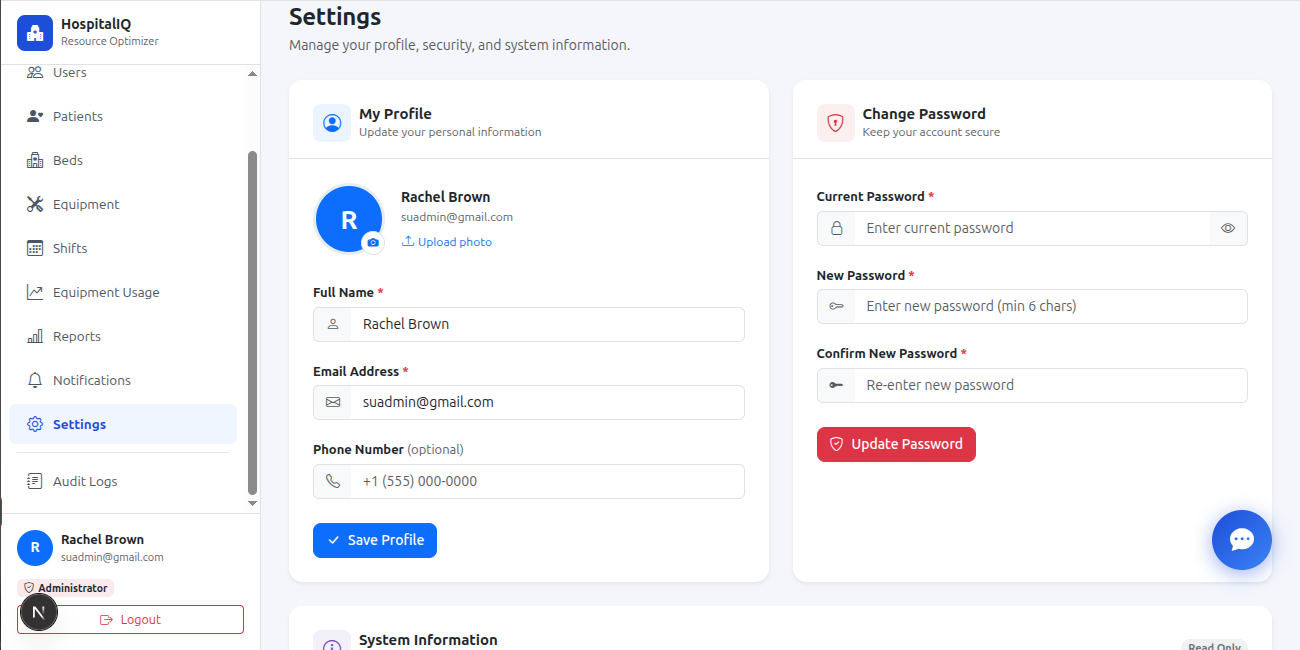
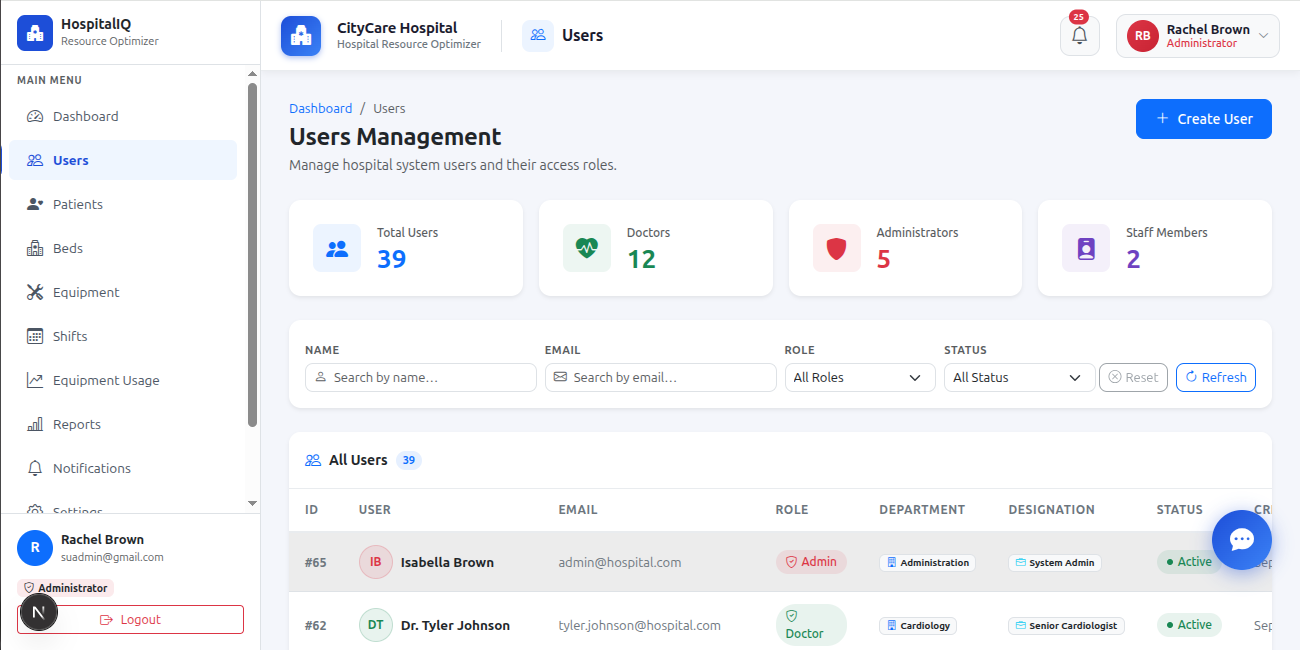
Hospital Resource Optimizer is a centralized hospital operations management platform designed to help healthcare organizations manage and optimize critical operational resources.
The platform brings hospital beds, staff shifts, medical equipment, maintenance activities, resource utilization, and operational analytics into a single structured system. It also provides AI-powered predictions, insights, and natural-language operational queries to support hospital resource planning while keeping the hospital’s operational data as the source of truth.
PROBLEM
Hospital operations teams often need to manage large numbers of beds, staff members, medical equipment, maintenance activities, and operational records across different processes:
The challenge was to establish a centralized platform that could bring critical hospital resources together, improve operational visibility, reduce manual effort, and support data-driven resource planning.
- Limited visibility into current hospital resource availability
- Manual and repetitive resource management activities
- Difficulty monitoring bed capacity across departments and wards
- Challenges in coordinating staff shifts and workforce requirements
- Difficulty tracking equipment status, location, and maintenance
- Limited visibility into equipment utilization
- Dependency on disconnected spreadsheets and manual records
- Difficulty using historical operational data for planning and decision support
SOLUTIONS
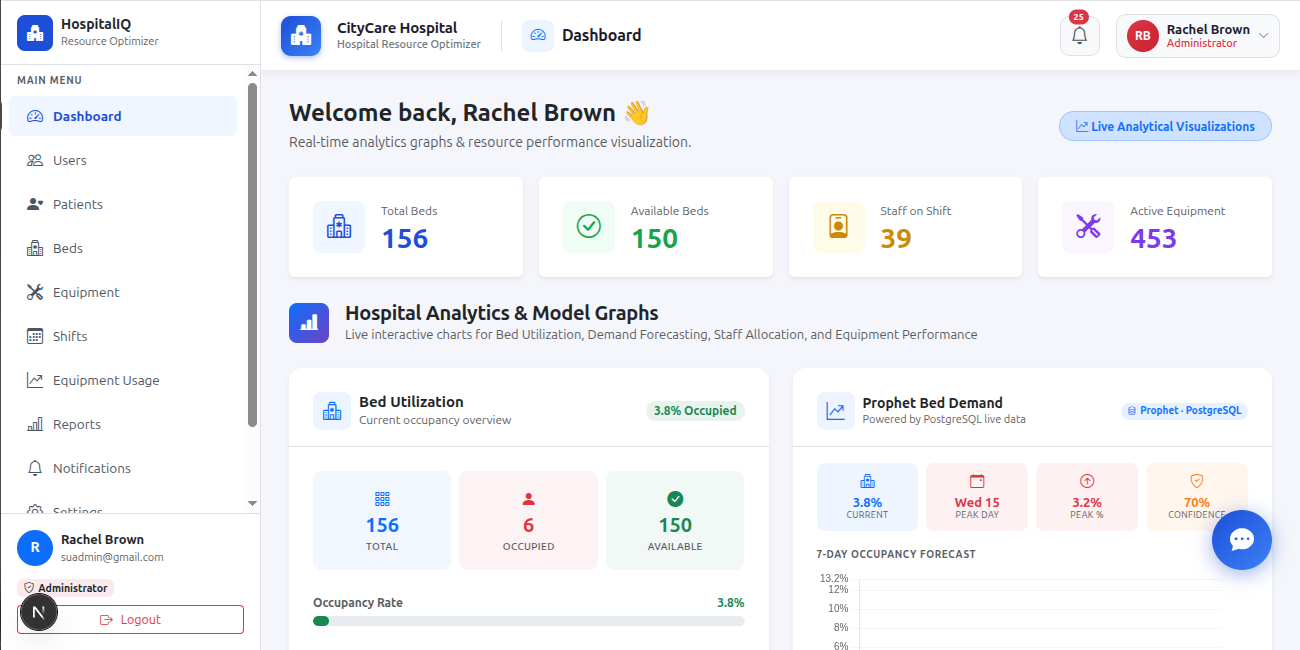
1. Centralized Hospital Resource Management
- Consolidated beds, staff shifts, equipment, maintenance, and operational information into one platform.
- Provided administrators with a centralized view of critical hospital resources.
- Reduced dependency on disconnected spreadsheets and manual processes.
- Improved visibility across different operational areas.
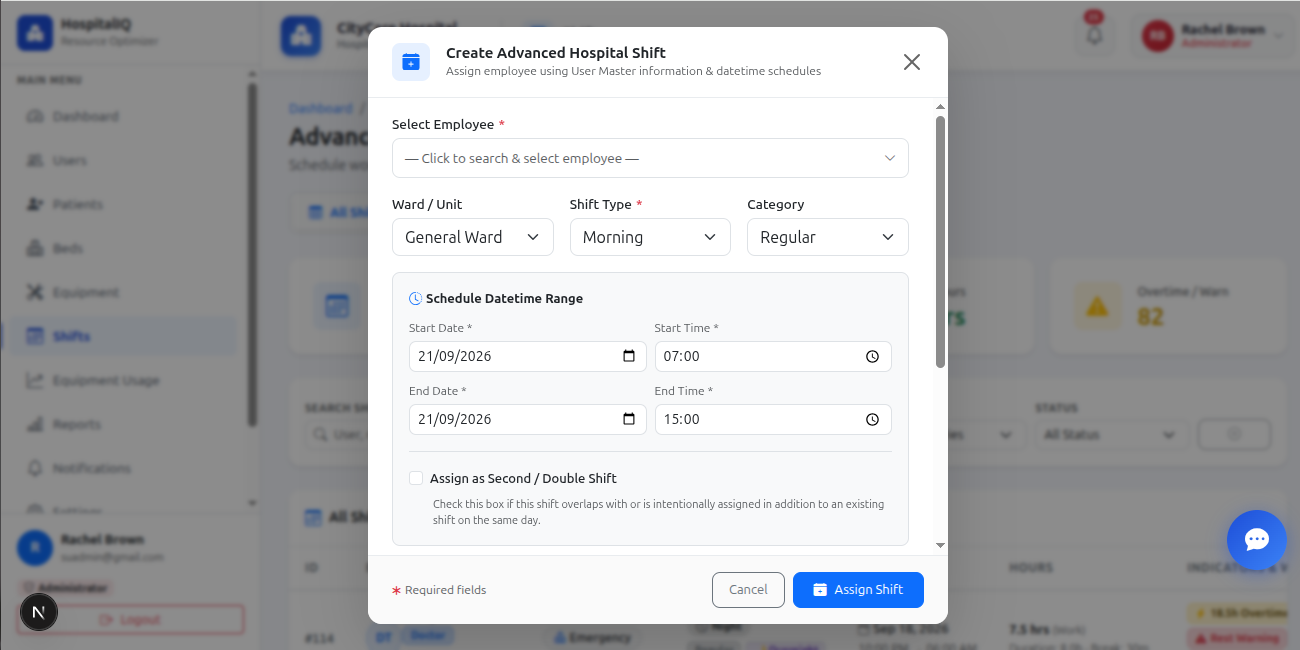
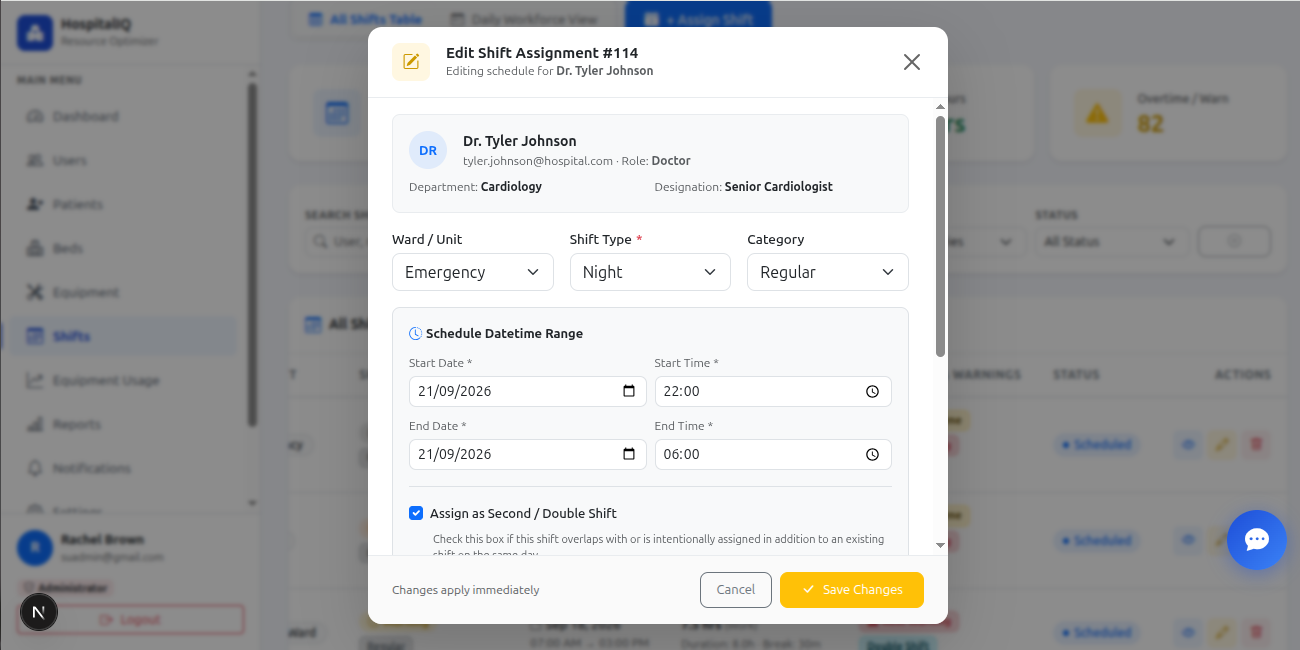
3. Workforce & Shift Management
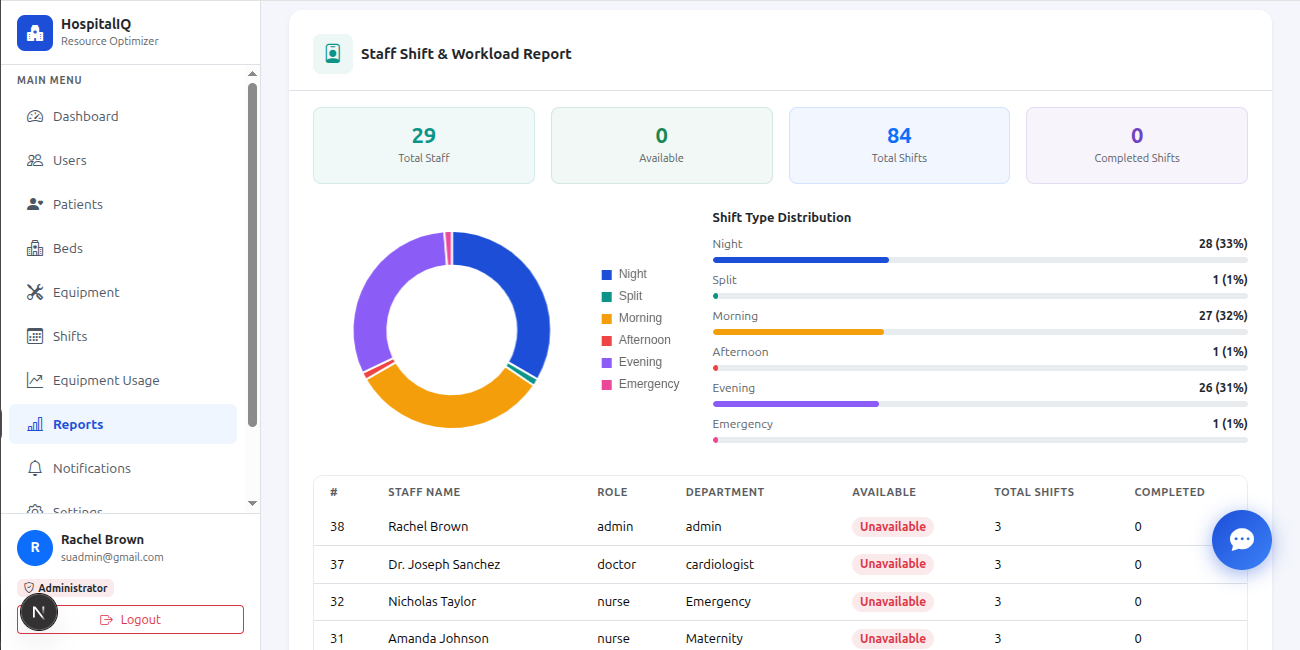
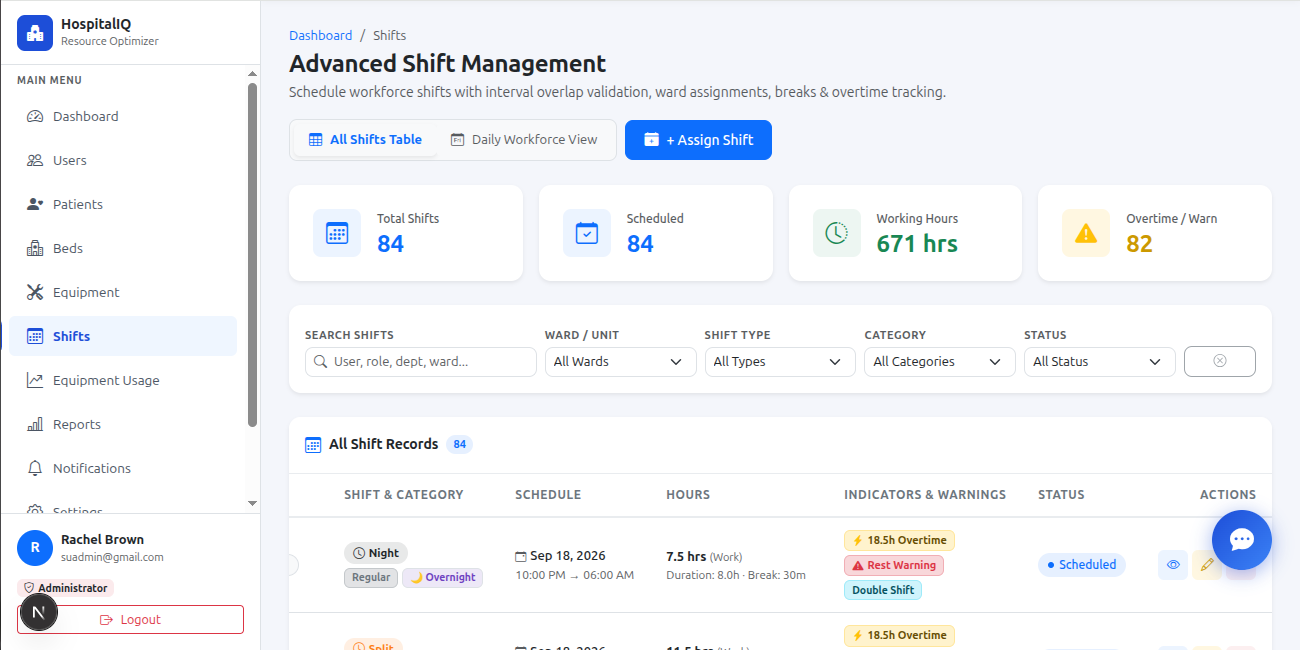
- Organized staff shifts based on date, time, department, role, and staff member.
- Used existing employee information to reduce duplicate staff records.
- Automatically populated relevant staff information during shift creation.
- Helped identify potential scheduling conflicts and staffing requirements.
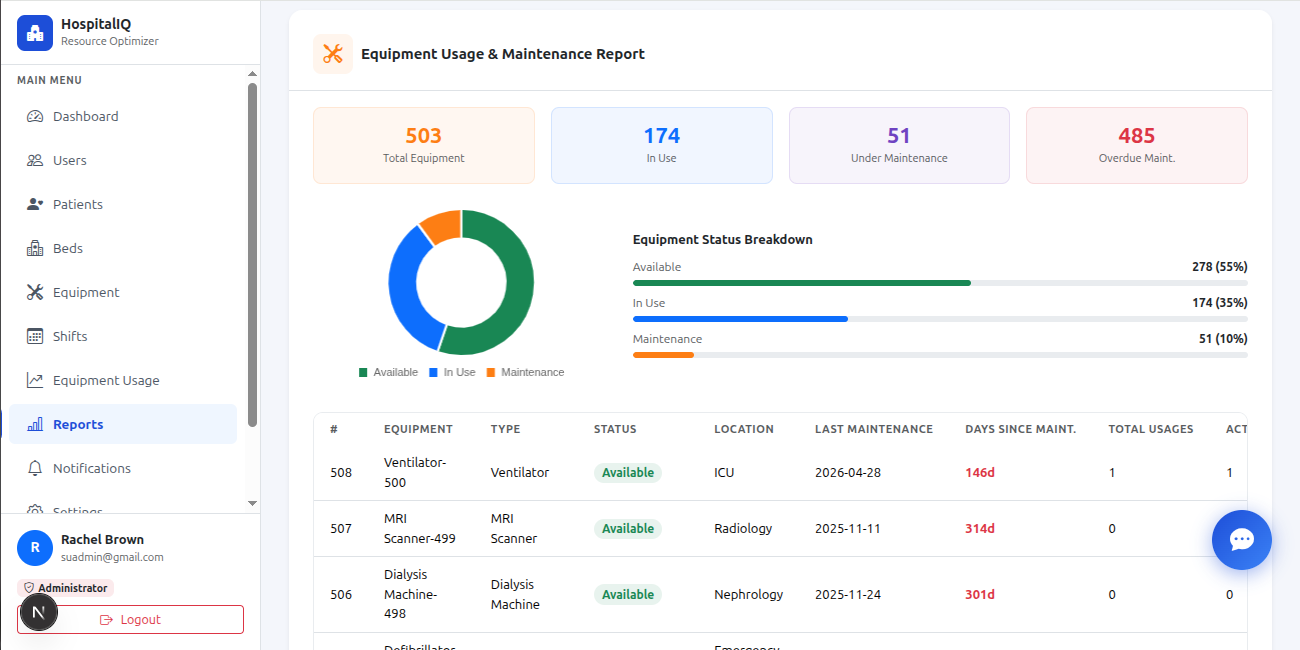
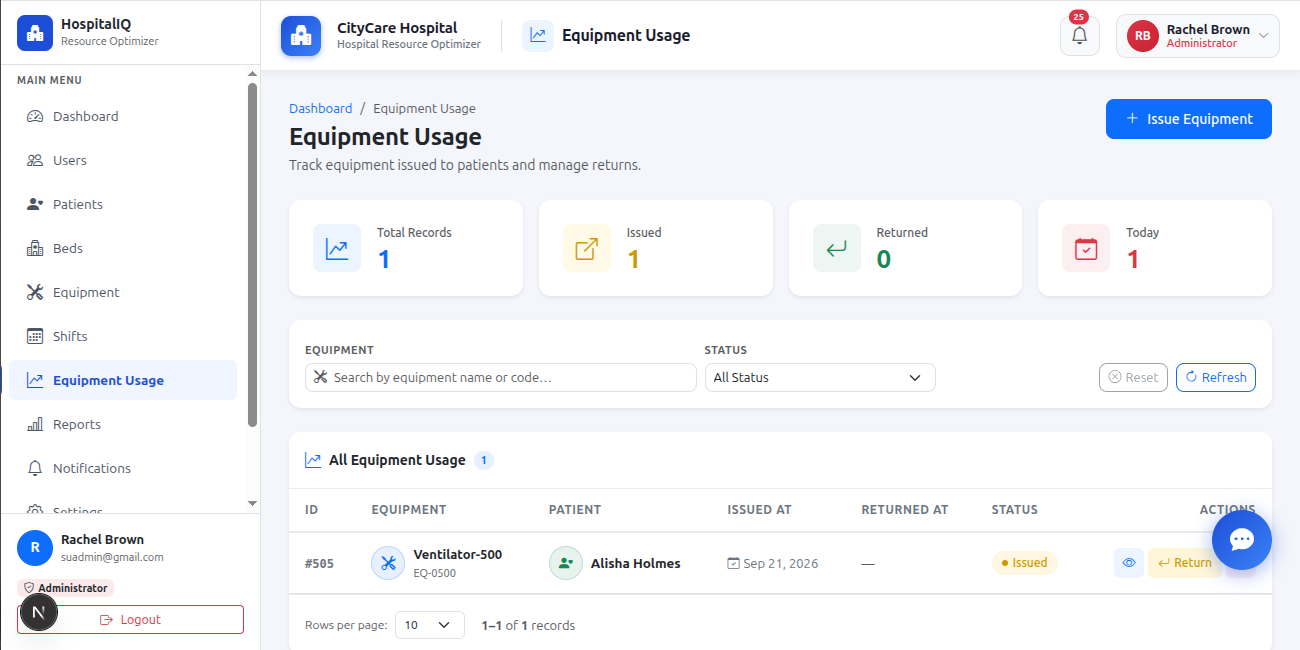
5. Equipment Utilization Analytics
- Monitored equipment usage and usage hours.
- Tracked idle hours and utilization percentages.
- Provided department-level utilization information.
- Helped management identify underutilized resources and potential operational bottlenecks.
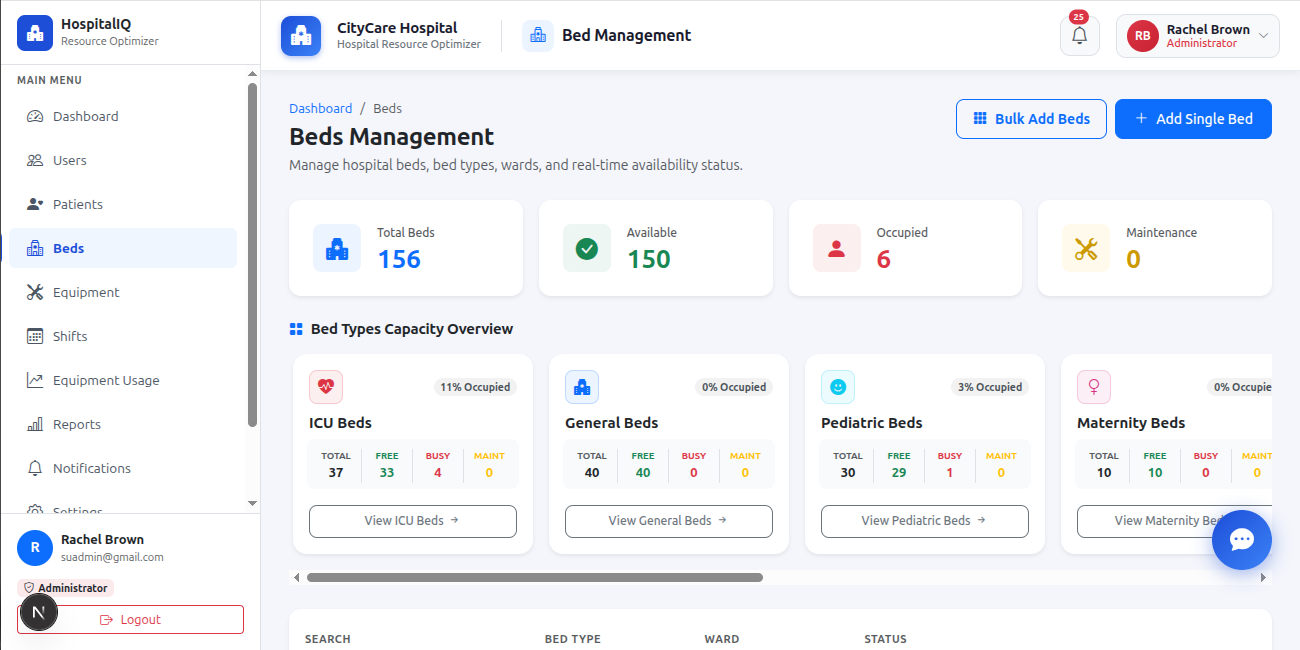
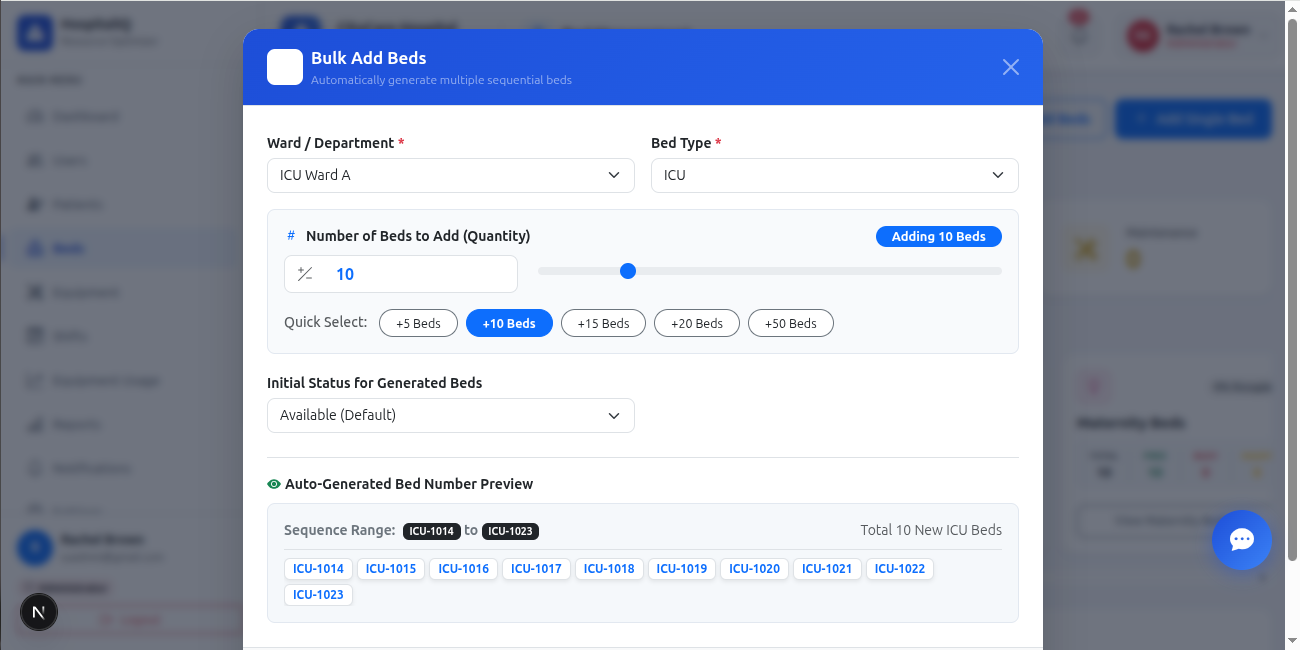
2. Intelligent Bed Management
- Managed ICU, General, Emergency, Maternity, Pediatric, and Surgical beds.
- Tracked available, occupied, and maintenance statuses.
- Provided ward-level capacity and occupancy analysis.
- Enabled searching and filtering of beds based on operational requirements.
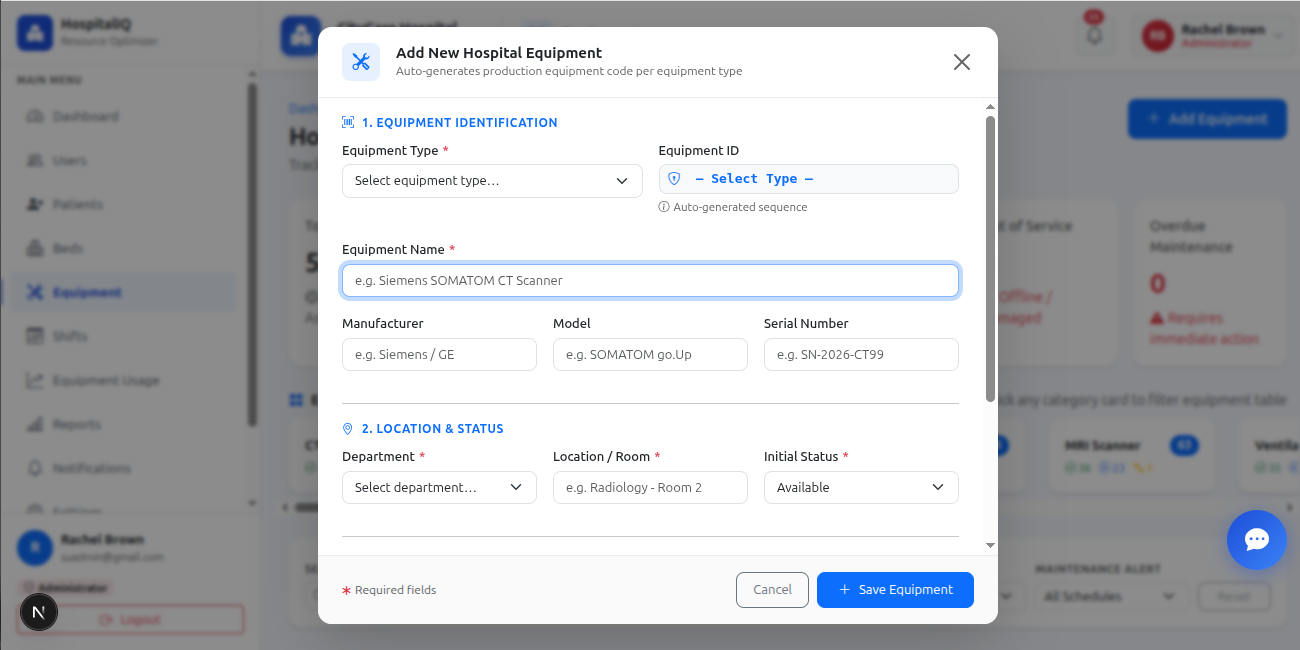
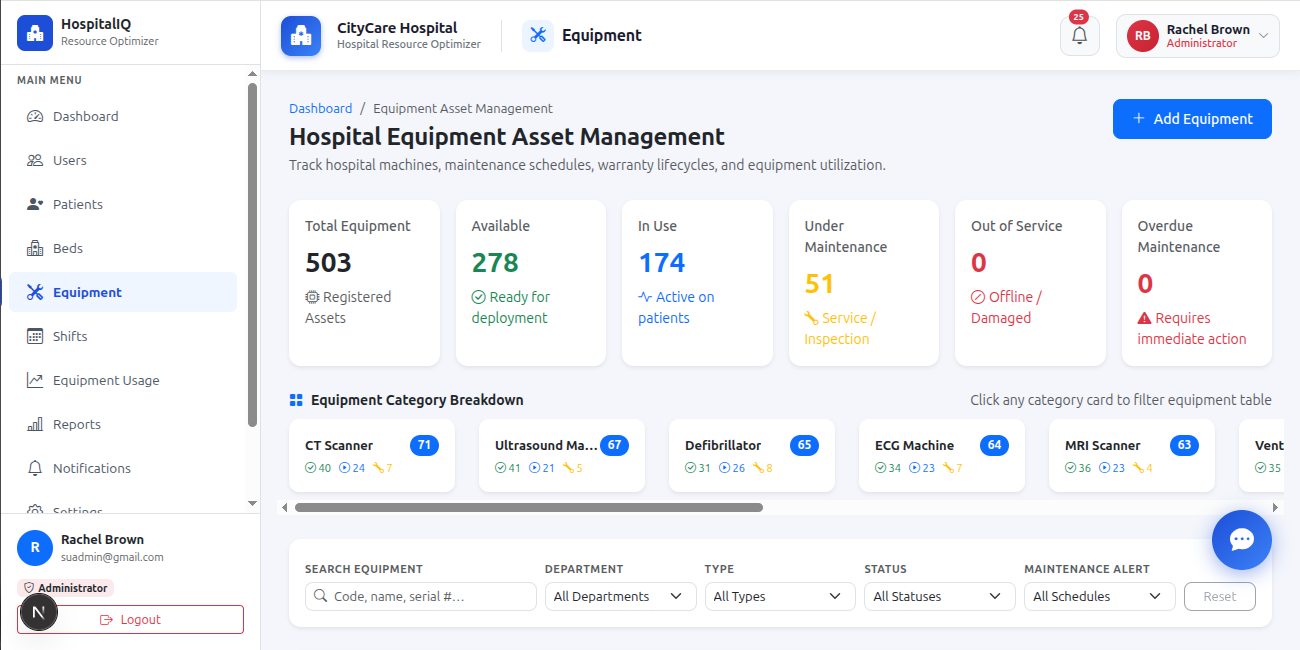
4. Medical Equipment & Maintenance Management
- Centralized hospital equipment records and operational information.
- Tracked equipment status, department, location, warranty, and maintenance details.
- Maintained preventive and corrective maintenance records.
- Supported calibration, inspection, issue reporting, upcoming maintenance, and overdue maintenance tracking.
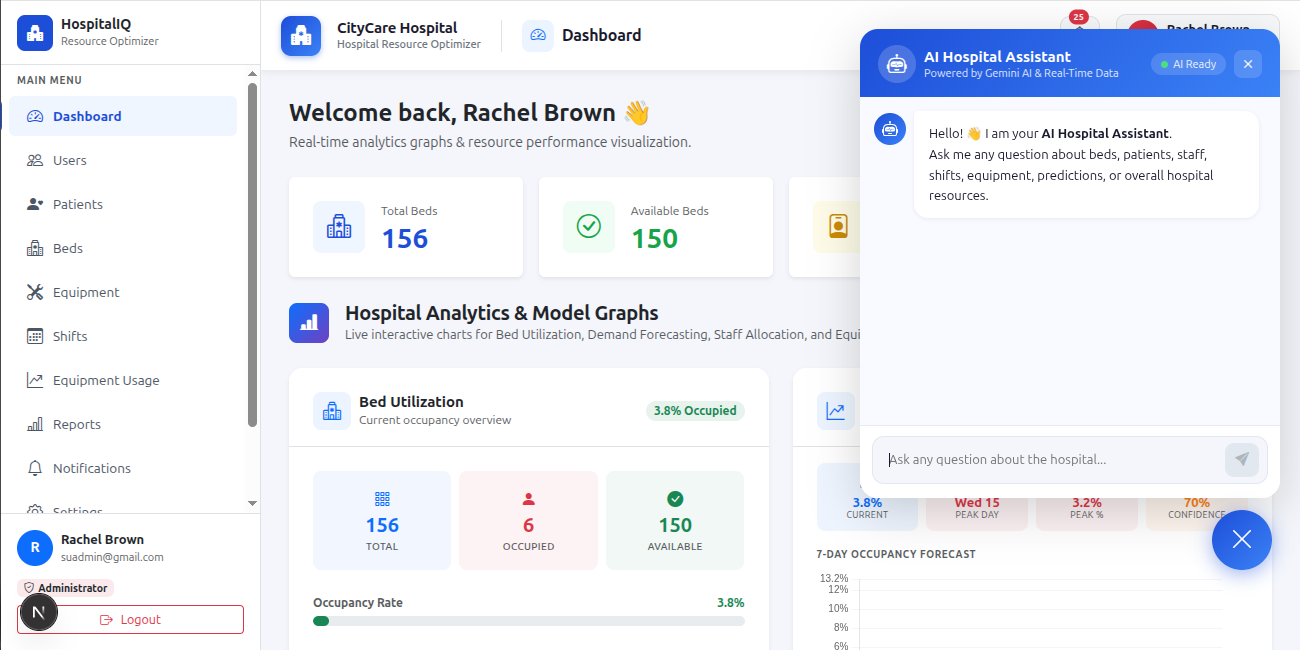
6. AI-Powered Resource Planning
- Used historical and operational information to support resource planning.
- Provided insights into bed demand and equipment utilization.
- Supported workforce planning and staffing analysis.
- Enabled administrators to interact with operational information through natural-language questions.
- Kept the hospital application and database as the source of truth while AI acted as a decision-support layer.
APPROACH
Our Approach
Requirements & Workflow Analysis
- Identified workflows for beds, staff, equipment, maintenance, and reporting.
- Defined operational requirements and user responsibilities.
Resource Management Design
- Designed a unified approach for managing hospital resources.
- Structured workflows around bed capacity and maintenance.
Dashboard & User Flow Design
- Organized information so users could review beds, staff, equipment, maintenance, utilization, insights, and reports in sequence.
- Focused on simplifying operational monitoring.
Analytics & Decision-Support Design
- Designed AI-assisted workflows for resource planning and natural-language operational questions.
- Maintained the hospital’s operational system as the source of truth.
Testing & Operational Validation
- Validated important resource-management workflows.
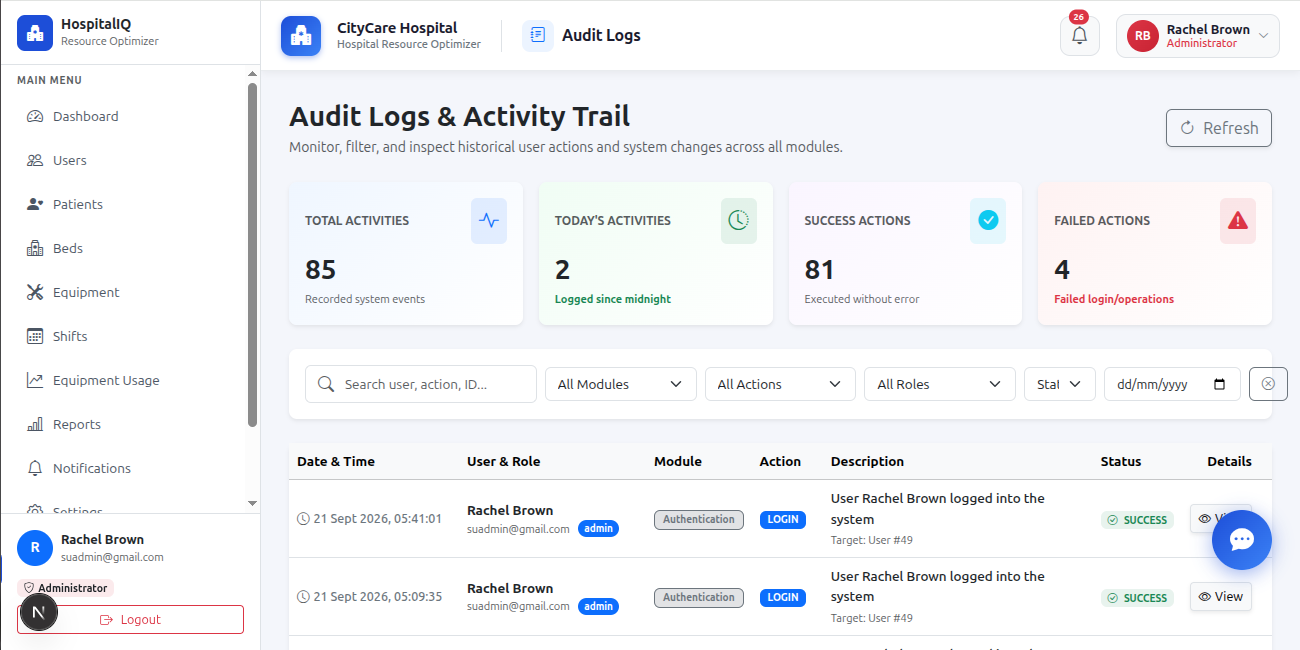
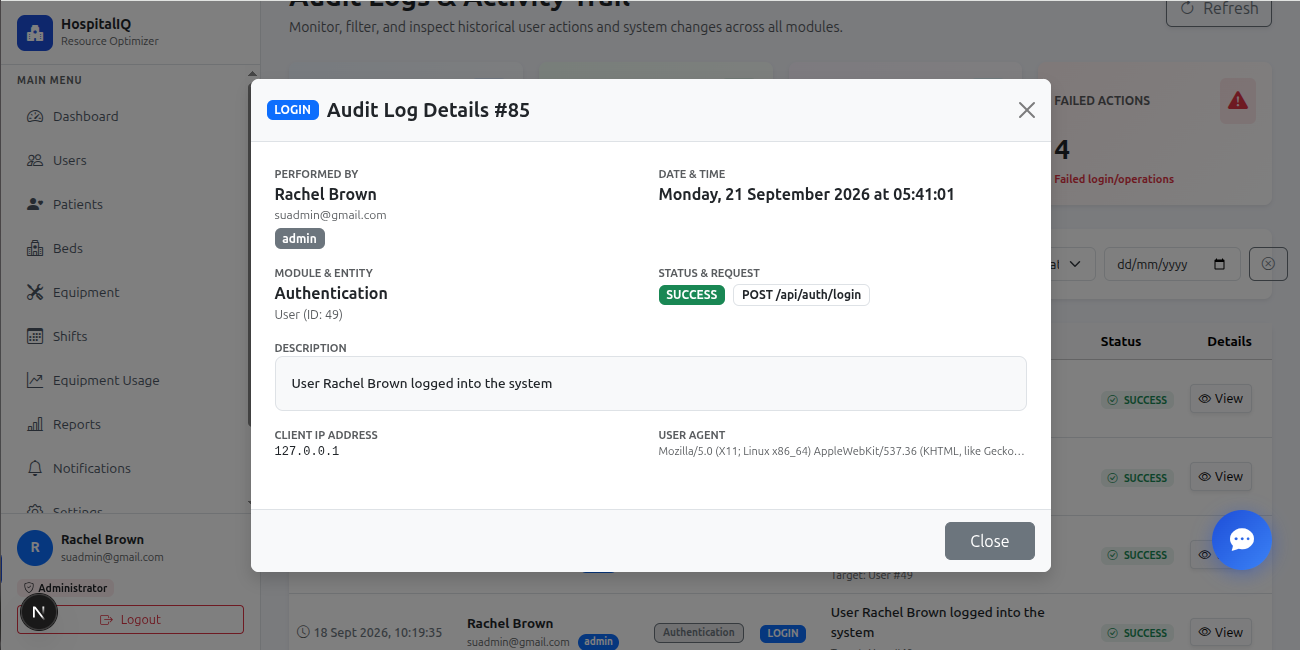
- Ensured operational activities could be tracked through audit records.
SUCCESS AND IMPACT
What Client Achieved
- Centralized hospital resource information
- Improved operational visibility
- More structured bed and workforce management
- Better equipment and maintenance tracking
- Improved resource utilization monitoring
- AI-assisted operational analysis
- Centralized reporting and analytics
- Improved traceability of operational activities
- A foundation for future hospital resource integrations and expansion
Business Impact
- Improved visibility into critical hospital resources
- Reduced manual work and spreadsheet dependency
- Better monitoring of bed capacity and occupancy
- Improved equipment availability and maintenance tracking
- Better understanding of equipment utilization
- Improved workforce and shift visibility
- Data-driven resource planning
- Greater accountability through audit logging
- More structured hospital operational workflows
Phone
+1 (224) 209-9860Address
1600 McConnor Parkway,
Suite 125, Schaumburg, IL 60173

Schedule a free consultation
Phone
+1 (224) 209-9860Address
1600 McConnor Parkway,
Suite 125, Schaumburg, IL 60173